Hybrid Energy System (Solar + Wind)
A Hybrid Energy System (Solar + Wind), also known as a Solar Wind Hybrid System, combines the strengths of solar energy and wind energy in one integrated setup to deliver better energy continuity, smarter backup planning, and more practical renewable energy use. Instead of depending on only one source, the system uses solar panels, a wind turbine, battery storage, inverter integration, and control logic to create a more balanced power solution for residential, commercial, and remote applications. Synergy Automatics is a trusted provider and installer of Wind solar energy systems in India. We design, supply, integrate, and install complete Wind-Solar Hybrid Energy Solutions based on site conditions, daily power usage, backup requirements, and long-term performance goals. Our approach focuses on correct sizing, safe installation, and clean integration so the system performs reliably and remains serviceable over time.
Why Solar + Wind Works Better Together
Solar energy and wind energy are both valuable renewable sources, but each has natural limits when used alone. Solar works best during the daytime when sunlight is available, while wind can contribute when usable airflow is present, including periods when sunlight is lower. wind turbine and solar panel combination can create a more balanced energy pattern and more practical long-term use.
Benefits of combining solar and wind
Solar supports daytime power generation
Wind can contribute during lower-sun periods depending on site airflow
Two generation sources can improve battery charging continuity
The system becomes less dependent on a single energy source
Backup planning becomes more practical with batteries and proper inverter design
Year-round energy support can become more balanced when one source is weaker in certain periods
This is why many users now prefer a solar + wind hybrid energy system instead of relying only on solar or only on wind.
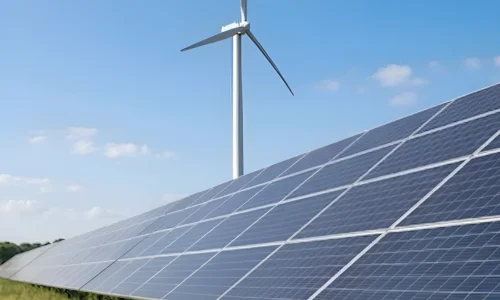
How a solar wind hybrid system Works
A solar wind hybrid system works through one planned power flow where both sources contribute to the same energy architecture.
Wind turbine generates power
The wind turbine contributes power when usable airflow is available at the site. Wind performance depends on actual wind conditions, mounting height, and surrounding obstructions.
Power flows to the distribution panel
The system supplies power to selected circuits or to the broader load plan depending on how it is designed. This coordinated architecture makes the system more practical than treating solar, wind, battery, and inverter as separate parts.
Solar panels generate DC power
Solar panels produce electricity during daylight hours and usually support most of the daytime energy requirement.
Inverter converts DC power to AC power
The inverter converts stored or incoming DC electricity into AC power for home or building loads.
Hybrid controller manages both sources
The controller coordinates solar and wind inputs, manages charging, and supports stable operation of the full system.
Battery bank stores excess energy
If batteries are included, extra power from solar and wind can be stored for later use during outages or low-generation periods.
Types of Hybrid Energy Systems
Hybrid energy systems can be designed in different ways depending on the application and energy objective.
On-Grid Hybrid Energy System
Works along with utility supply and helps reduce grid dependence for selected loads. In some designs, batteries may also be included.
Off-Grid Hybrid Energy System
Designed for locations where utility supply is absent, weak, or unreliable. These systems depend more heavily on renewable generation and battery storage.
Hybrid System with Battery Backup
Designed for users who want backup during outages. The battery stores energy from solar and wind for later use.
Rooftop Solar Wind Hybrid System
Designed for properties where roof space and structural conditions allow rooftop solar and suitable wind installation.
Ground-Mounted Hybrid Energy System
Applications of solar & wind hybrid system
A Hybrid Energy System (Solar + Wind) can be used in many types of properties where better energy continuity, backup support, and lower grid dependence are important. The right application depends on site conditions, daily power requirement, and how the system is planned.
Residential Applications
Hybrid energy systems are suitable for residential properties that need dependable power support and better backup planning.
Common residential applications include:
- Independent houses
- Villas
- Duplex homes
- Gated properties
- Vacation homes
Remote and Weak-Grid Locations
Hybrid energy systems are a practical choice for locations where utility supply is unavailable, unstable, or unreliable.
Common applications include:
-
Off-grid sites
-
Remote service buildings
-
Weak-grid areas
-
Rural installations
-
Locations with frequent power cuts
Farmhouses and Rural Properties
Hybrid systems are especially useful in farmhouses and rural locations where power interruptions are more common or where grid supply may be weak.
Common applications include:
- Farmhouses
- Remote homes
- Semi-rural residences
- Agricultural living spaces
- Properties with regular backup needs
Institutional Application
In some projects, hybrid systems are also used where continuous support for selected loads is important and renewable energy use is preferred.
Common applications include:
- Schools
- Monitoring stations
- College
- Academy’s
Small Commercial Applications
For small commercial spaces, a solar + wind hybrid system can support important loads and improve energy stability for daily operations.
Common commercial applications include:
-
Offices
-
Retail shops
-
Clinics
-
Guest houses
-
Workshops
-
Small service buildings
Benefits of hybrid renewable energy systems
A well-planned hybrid system offers several practical advantages over single-source renewable setups.
Future-Ready Energy Solution
The system can often be planned with future expansion in mind, including higher battery capacity, additional solar, or improved monitoring.
Stronger Year-Round Performance
When one source is weaker in a season, the other may help balance overall energy support.
Improved Backup During Power Cuts
With batteries and the right inverter design, essential loads can stay ON longer during outages.
Lower Grid Dependence for Key Loads
The system can support selected circuits so the property depends less on EB supply.
Better Charging Continuity
Two sources can help keep the battery charging more regularly instead of depending only on solar hours.
More Stable Energy Support
Solar works best during the day, while wind can contribute when sunlight is low depending on site conditions.
Smarter System Planning
A properly integrated hybrid design can reduce battery stress and improve overall system life.
Why Choose Synergy Automatics for Hybrid Energy Systems?
Synergy Automatics is a reliable provider and installer of Hybrid Energy Systems (Solar + Wind) in India. We do not treat hybrid projects as simple product supply. We design them as complete energy solutions based on actual site conditions and user requirements.
Complete system provider and installer
Safe installation with proper protections
Quality materials and reliable components
Correct sizing without unnecessary over-sizing
Service-friendly layout and installation planning
Engineering-led design approach
Solar + wind + battery + inverter planned as one system
Battery, inverter, and wind matching based on site need
Project execution from site assessment to commissioning
Support for residential, commercial, and remote applications
Sizes and Capacity Options
FAQs – Hybrid Energy System (Solar + Wind)
1) What is a Solar Wind Hybrid System?
A Solar Wind Hybrid System is an integrated setup that combines solar panels, a wind turbine, battery storage, and inverter control in one system. It helps improve energy continuity, backup support, and renewable energy use.
2) How does a Wind-Solar Hybrid Energy Solution work?
A Wind-Solar Hybrid Energy Solution works by using solar power during daylight hours and wind power when usable airflow is available. The controller manages both sources, the battery stores energy if included, and the inverter supplies AC power to the required loads.
3) Why is a wind turbine and solar panel combination useful?
A wind turbine and solar panel combination is useful because it reduces dependence on a single energy source. Solar supports daytime generation, while wind can contribute during lower-sun periods depending on site conditions.
4) Are hybrid renewable energy systems suitable for every property?
No. Hybrid renewable energy systems are suitable only when the site has good solar exposure, workable wind conditions, safe installation space, and a practical energy requirement that justifies the system.
5) What are the benefits of hybrid energy technology?
Hybrid energy technology can offer better charging continuity, improved backup during outages, lower grid dependence for selected loads, and stronger year-round energy support when the system is designed correctly.
6) Can wind and solar power systems share the same battery bank?
Yes. Wind and solar power systems can share the same battery bank when the system is designed with the right controller, inverter, and battery configuration for safe and stable integration.
7) Is a wind solar energy system in India practical for homes and businesses?
Yes. A wind solar energy system in India can be practical for homes, villas, farmhouses, small commercial buildings, and weak-grid locations when solar conditions, wind feasibility, and backup needs are properly assessed.
8) How to connect wind turbine to grid in a hybrid setup?
A wind turbine should not be connected to the grid directly without proper system design. In a hybrid setup, the turbine is usually integrated through the correct controller, inverter, and protection system so power can be managed safely and efficiently.
9) Where are hybrid wind energy systems commonly used?
Hybrid wind energy systems are commonly used in residential properties, farmhouses, rural buildings, small commercial spaces, and remote locations where better energy continuity and backup support are important.
10) Can a Solar & Wind Hybrid System be expanded later?
In many cases, yes. A Solar & Wind Hybrid System can be planned for future expansion such as adding more battery capacity, additional solar panels, or improved monitoring, provided the original design supports that growth.