Warehouse Conveyor Systems
Synergy Automatics, a trusted manufacturer of warehouse conveyor systems in India, delivers advanced solutions to streamline warehouse operations. A warehouse conveyor system is designed to transport goods efficiently, reduce manual handling, and improve safety in storage and distribution facilities. These conveyor systems automate the flow of pallets, cartons, packages, and containers, ensuring speed, consistency, and accuracy in material handling.
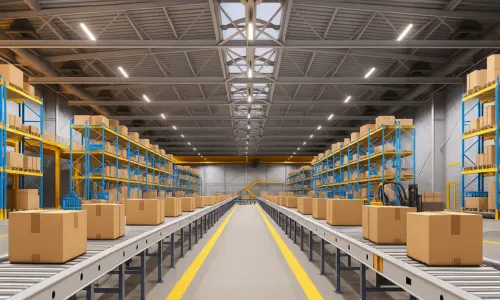
Why Conveyor Systems are Important in Warehouses
Warehouse conveyor systems are crucial for modern logistics and storage because they automate material flow, reduce manual handling, and ensure faster order fulfillment. Without conveyors, warehouses face delays, higher labor costs, and increased risks of injury. By using automated warehouse conveyors, businesses can maintain accuracy in inventory management, improve throughput, and keep pace with high-volume demands in e-commerce and industrial distribution. In short, conveyors transform warehouses into safe, efficient, and scalable operations.
Types of Warehouse Conveyor Systems
Belt Conveyors
Belt conveyors are the most widely used conveyor systems for warehouses, designed with durable PVC or rubber belts stretched over pulleys and driven by electric motors. These conveyors can operate horizontally or at inclines of up to 20°, handling loads efficiently across long distances. With capacities reaching thousands of units per hour, they are ideal for moving cartons, totes, and packaged goods smoothly while ensuring consistent material flow.
Roller conveyors
Roller conveyors are another essential option, commonly used in warehouse material handling conveyors for both gravity-fed and motor-driven operations. Built to carry heavier loads such as pallets, crates, and large cartons, they can handle weights up to 1,500 kg per pallet. Their robust structure and flexibility make them suitable for high-throughput environments where speed and durability are critical.
Overhead conveyors
Overhead conveyors maximize floor space utilization in warehouses by moving products suspended above the ground. These systems are often used in automated warehouse conveyors for garments, automotive components, and assembly line integration. Power and Free systems allow for accumulation, routing, and controlled movement, with individual carriers handling loads of up to 500 kg, making them ideal for warehouses with space constraints.
Slat Conveyors
Slat or chain conveyors are designed for heavy-duty warehouse applications where standard belts would wear out quickly. Constructed with steel slats or heavy chain mechanisms, these conveyors can manage bulky, unevenly shaped materials or equipment components. With load capacities of several tons, they are reliable for industrial conveyor belts in warehouses requiring impact resistance and long operational life.
Vertical conveyors
Vertical conveyors function as material lifts in warehouses, transporting cartons, pallets, or containers between different floors. With capacities ranging from 100 kg to several tons per lift cycle, these conveyors improve vertical movement efficiency, reduce dependency on forklifts, and are essential in high-density warehouse conveyor solutions.
Magnetic conveyors
Magnetic conveyors are specialized warehouse conveyor equipment designed for transporting ferrous materials such as screws, nails, or machine parts. By embedding magnets into the conveyor belt or chain, these systems prevent spillage and ensure safe, controlled handling of sharp or metallic items, making them suitable for recycling plants and metal-processing warehouses.
Bucket elevators
Bucket elevators are vertical warehouse conveyor systems that use a chain or belt fitted with buckets to lift grains, powders, or bulk items to different levels within a facility. With capacities ranging from 10 to 1,000 tons per hour and height limits exceeding 50 meters, they are widely used in grain storage conveyors, silos, and multi-level distribution warehouses where vertical transfer is essential.
Pneumatic conveyors
Pneumatic conveyors rely on air pressure or vacuum systems to transport fine powders, pellets, and other lightweight materials through enclosed pipelines. Capable of handling 1–50 tons per hour, these conveyors are dust-free, hygienic, and energy-efficient, making them particularly suitable for food-grade warehouses, chemical storage, and industries requiring contamination control.
Sortation conveyors
Sortation conveyors represent the most advanced type of smart conveyor systems for warehouses, equipped with barcode scanners, RFID readers, and diverters to automatically direct items to their correct destinations. With handling speeds of 5,000–15,000 packages per hour, they are crucial for e-commerce fulfillment centers and parcel distribution warehouses where order accuracy and high-speed throughput are mandatory.
Applications of Warehouse Conveyor Systems
Storage & Retrieval
Conveyor belts for warehouse storage and retrieval ensure smooth transfer of goods to and from shelves, racks, and silos.
Industrial Plant Warehousing
Conveyor solutions for warehouses move raw materials and finished products efficiently in large industrial plants.
Order Fulfillment
Automated warehouse conveyors streamline picking, packing, and sortation processes in e-commerce and distribution centers.
Inbound & Outbound Logistics
Systems support unloading of incoming goods and loading for dispatch, reducing truck turnaround time.
Material Handling Integration
Integrated with smart conveyor systems for warehouses, these conveyors connect seamlessly with Warehouse Management Software (WMS).
Benefits of Warehouse Conveyor Systems
Efficient Material Handling – Speed up product flow and reduce manual intervention.
Enhanced Productivity – Automated conveyors allow higher throughput in warehouses.
Reduced Labour Costs – Less manpower required for repetitive transport tasks.
Improved Safety – Fewer lifting injuries and better ergonomics for workers.
Energy-Efficient Solutions – Modern energy-efficient warehouse conveyor solutions minimize power usage.
Scalable & Flexible – Expandable systems grow with future business needs.
Reduced Product Loss – Automation ensures precise and gentle handling, lowering spoilage and wastage of perishable goods.
Challenges Without Warehouse Conveyors
1. High dependence on manual labour for moving goods.
2. Slower throughput and processing delays.
3. Increased workplace injuries from lifting heavy items.
4. Poor inventory tracking and accuracy issues.
5. Bottlenecks in order fulfillment and distribution.
Why Choose Synergy Automatics for Warehouse Conveyor Systems

Proven expertise
With years of experience in delivering warehouse conveyor systems, we specialize in designing solutions that match high-throughput and industrial warehouse needs.

Industry-Specific Solutions
From warehouse roller conveyors to automated warehouse conveyors, our systems are tailored to handle diverse products—whether cartons, pallets, or fragile goods.

Durability & Reliability
We provide durable warehouse conveyor belts and smart conveyor systems for warehouses that ensure smooth, continuous operations with minimal downtime.

Energy-Efficient & Safe
Energy-Efficient & Safe – Synergy Automatics offers energy-efficient warehouse conveyor solutions designed to reduce operational costs while enhancing workplace safety.

Integration with Warehouse Operations
Our warehouse material handling conveyors can be seamlessly integrated with WMS and automation tools, ensuring better inventory tracking and faster order fulfillment.

National Standards
Trusted by industries across India, we deliver complete warehouse conveyor solutions—from supply to installation—with reliable after-sales service.
FAQs - on Warehouse Conveyor Systems
How do automated warehouse conveyors improve productivity?
Automated warehouse conveyors reduce downtime by providing continuous product flow, handle thousands of items per hour, and integrate with warehouse management software (WMS) for real-time tracking. They also cut labour costs and boost overall warehouse throughput.
Can warehouse conveyor belts handle fragile or irregular products?
Yes. Modern warehouse conveyor belt systems are designed with adjustable speeds, cushioning features, and automated sensors, making them suitable for fragile, lightweight, or irregularly shaped products. This ensures damage-free transport and smooth material flow.
Which types of conveyors are most commonly used in warehouses?
The most common types include warehouse belt conveyors for cartons and packages, roller conveyors for pallets and crates, overhead conveyors for space optimization, bucket elevators for vertical lifting, and sortation conveyors for high-speed distribution. Each type is chosen based on product size, weight, and throughput requirements.
What are warehouse conveyor systems and why are they important?
Warehouse conveyor systems are automated material handling conveyors designed to transport goods within storage or distribution facilities. They are important because they reduce manual labour, improve speed, ensure accuracy in order fulfillment, and create safer, more efficient warehouse operations.
Can conveyor systems be customized for specific warehouse layouts?
Absolutely. Industrial conveyor belts for warehouses can be tailored to fit narrow aisles, multi-level facilities, or complex distribution centers. Modular warehouse conveyor systems allow scalability to adapt as business needs grow.
Are warehouse conveyor systems energy-efficient?
Yes. Energy-efficient warehouse conveyor solutions use low-friction rollers, variable frequency drives (VFDs), and smart controls that reduce power consumption. This helps warehouses cut operating costs and align with sustainability goals.
What is the cost of warehouse conveyor systems?
The cost varies based on conveyor type, capacity, and automation level. Simple gravity roller conveyors may cost less, while advanced automated warehouse conveyors with sortation systems are more expensive but deliver long-term ROI through efficiency and reduced labor.