AMR Solutions for Manufacturing Material Movement Automation
Synergy Automatics provides AMR solutions for manufacturing automation to improve raw material movement, line feeding, WIP transfer, multi-floor logistics, and production support operations. Our AMR-based solutions help reduce manual handling, improve material availability, minimise production delays, and support smoother factory floor operations.
Manufacturing units depend on continuous material movement between stores, production lines, assembly stations, quality areas, work-in-progress zones, and dispatch points. When these movements are handled manually through workers, trolleys, forklifts, or pallet jacks, it can lead to delays, wrong part delivery, labour dependency, safety risks, and production stoppages.
Autonomous Mobile Robots help solve these challenges by automating repetitive material transport, just-in-time line feeding, raw material movement, multi-floor flow, and mobile robot support. Synergy Automatics designs AMR solutions based on factory layout, production flow, load type, route distance, takt time, system requirements, and business workflow.
Manufacturing Challenges
- Late material delivery can stop production lines and affect output.
- Wrong parts reaching the wrong station can cause rework, scrap, and quality issues.
- Manual line feeding increases dependency on material handlers.
- Unplanned delivery intervals disturb takt time and production planning.
- Manual raw material unloading and staging can be slow and injury-prone.
- Goods waiting near docks create bottlenecks before production starts.
- Multi-floor movement requires manual handoffs near lifts or elevators.
- Fixed cobots or robot arms may remain underutilised when tied to one station.
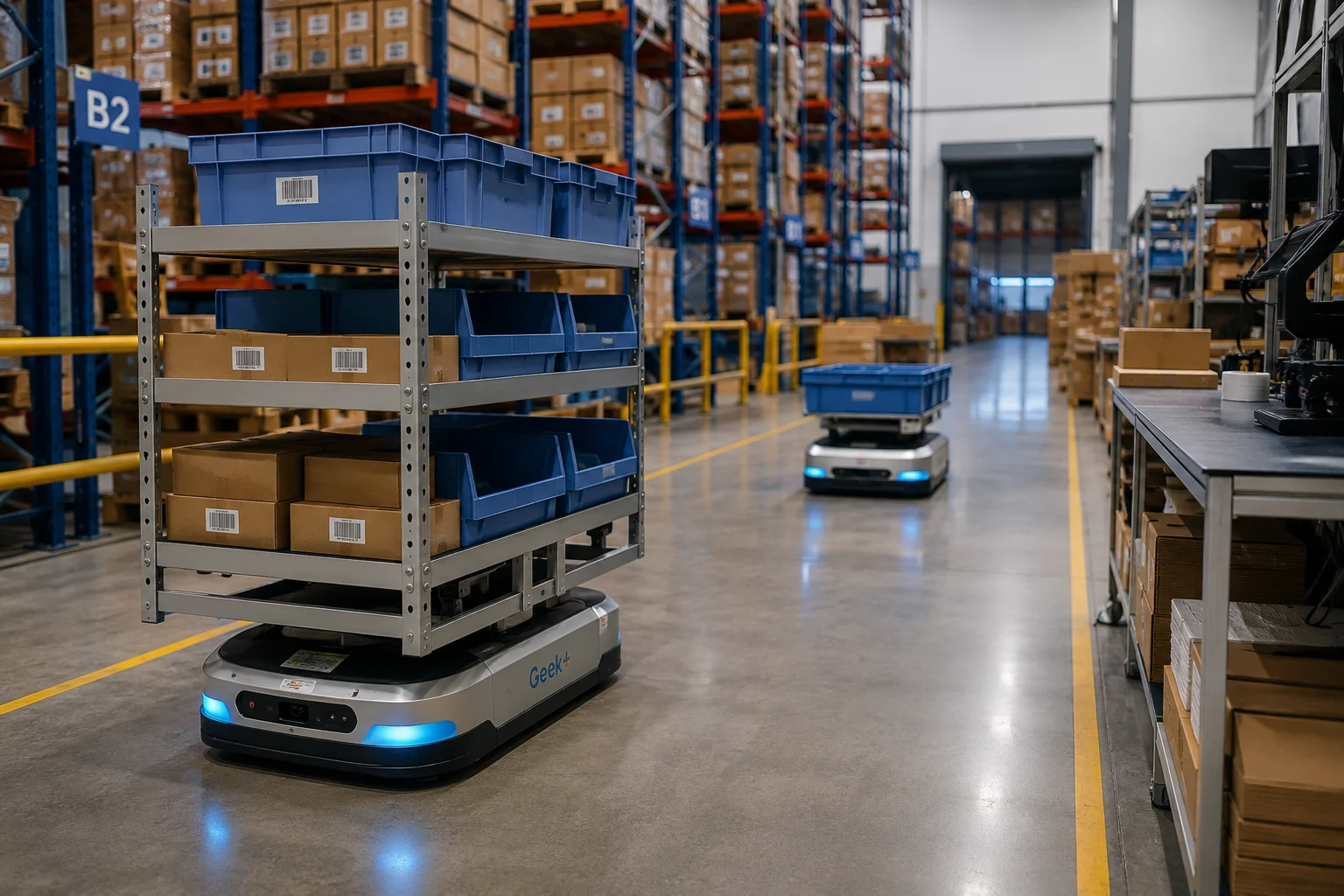
AMR Applications for Manufacturing
Just-in-Time Line Feeding
AMRs support timely movement of parts, components, kits, and materials from stores to production lines. This helps reduce line stoppages, improve material availability, and maintain better production flow.
Cobot & Robot Arm Mobility
AMRs can support mobile cobot or robot arm movement between different workstations. This helps improve robot utilisation, reduce fixed-station dependency, and support flexible production line changes.
Multi-Floor Material Flow
AMR solutions can support material movement between different factory floors when integrated with doors, lifts, and controlled access points. This reduces manual handoffs and improves continuous material flow across floors.
Raw Material Inbound Handling
AMRs help move raw materials from inbound areas, docks, or storage zones to production staging areas. This reduces waiting time, improves dock-to-line movement, and supports better production readiness.
Benefits of Manufacturing AMR
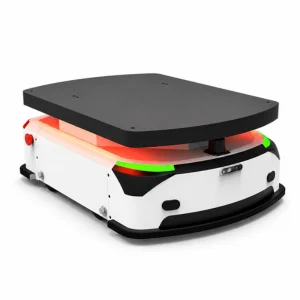
Reduces manual material movement inside the factory.
Improves production line feeding and material availability.
Helps reduce line stoppages caused by delayed material delivery.
Minimises wrong part movement and station-level errors
Supports better WIP movement between production stages.
Helps reduce forklift and trolley dependency in factory aisles.
Improves raw material flow from inbound to production areas.
Supports flexible production layouts and future automation expansion.
Helps improve productivity, workflow control, and operational efficiency.
Why Choose Synergy Automatics
Synergy Automatics provides application-focused AMR solutions for real manufacturing movement challenges.
We support AMR planning for raw material movement, line feeding, WIP transfer, production staging, and multi-floor material flow.
We focus on on-time project delivery with proper planning, installation, testing, and support.
We study your factory layout, production flow, load type, route distance, station requirements, and daily movement volume before planning the solution.
Our solutions are designed to fit your existing manufacturing workflow and support future factory automation expansion.
We provide quality materials and reliable automation components to support long-term performance.
We offer code customization and workflow customization based on your production process and system requirements.
FAQ for Manufacturing AMR
1. What is AMR used for in manufacturing?
AMR is used in manufacturing to move raw materials, components, WIP items, finished goods, tools, and production kits between stores, production lines, assembly stations, and dispatch areas.
2. How does AMR help in production line feeding?
AMR helps deliver materials to production lines on time, reducing manual movement and helping prevent production delays caused by late material supply.
3. Is AMR better than conveyor systems?
Yes, AMR can reduce line stoppage by improving material availability, supporting scheduled delivery, and reducing dependency on manual transport.
4. Can AMR move raw materials inside a factory?
Yes, AMRs can move raw materials from inbound areas, storage zones, or staging points to production areas based on load type and route conditions.
5. Is AMR suitable for WIP movement?
Yes, AMR is suitable for moving work-in-progress materials between production stages, assembly areas, inspection zones, and storage points.
6. Can AMR work with cobots or robot arms?
Yes, AMR can support mobile cobot or robot arm applications where one robotic system needs to move between multiple workstations.
7. Can AMR be used in small manufacturing units?
Yes, AMR can be used in small manufacturing units if there is proper aisle space, clear movement routes, defined pickup points, and suitable workflow planning.
8. Is AMR safe around factory workers?
Yes, AMRs are designed with sensors and navigation systems to detect people, machines, racks, and obstacles during movement.
9. How long does it take to install an AMR system?
Installation time depends on site study, route planning, robot configuration, software setup, testing, and any required system integration.
10. Can AMR connect with warehouse software?
Yes, AMR systems can connect with WMS, ERP, or other warehouse software for automatic task creation, tracking, and operation visibility.
11. What maintenance is required for AMR robots?
AMR maintenance usually includes battery checks, sensor cleaning, wheel inspection, software updates, safety checks, and regular performance testing.
12. How do I choose the right AMR for my warehouse?
The right AMR depends on your load weight, material type, aisle space, travel distance, pickup and drop points, shift volume, and integration requirements.
13. Can AMR reduce warehouse labour cost?
Yes, AMR can reduce labour dependency for repetitive movement tasks and help workers focus on picking, packing, checking, and dispatch work.
14. Does AMR need floor marking or track installation?
Most AMRs do not need fixed tracks or major floor marking like traditional guided vehicles, but proper route mapping and safety planning are required.