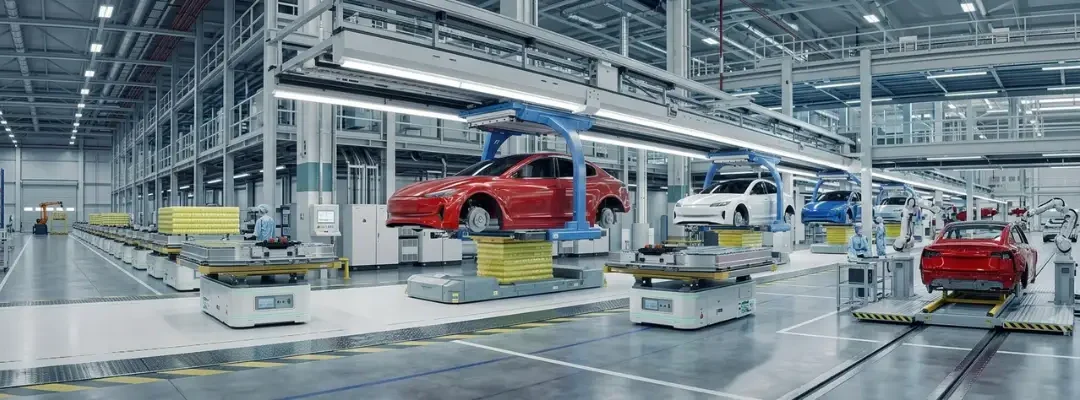
Robotics automation can significantly improve factory productivity, safety, material flow, and operational control. However, successful implementation does not begin with purchasing robots. It begins with a clear understanding of your factory’s process challenges, movement patterns, safety risks, workforce readiness, and long-term automation goals.
Many factories consider robotics automation when manual processes become slow, repetitive, unsafe, or difficult to scale. Robots can help reduce dependency on manual material movement, improve production consistency, minimize downtime, and support smarter industrial operations. But if automation is implemented without proper planning, it may create workflow gaps, integration issues, safety concerns, or poor return on investment.
Before implementing robotics automation in your factory, you need a structured evaluation of your current operations. This guide explains the key factors every manufacturer should consider before starting a factory robotics automation project.
Robotics automation is not just a technology upgrade. It is an operational transformation. A robot must work within your existing production flow, material handling process, safety system, workforce structure, and software environment.
A well-planned robotics automation project can help a factory:
- Reduce repetitive manual work
- Improve workplace safety
- Increase production efficiency
- Reduce material movement delays
- Improve line feeding accuracy
- Reduce forklift dependency
- Improve internal logistics visibility
- Support multi-shift operations
- Standardize repetitive tasks
- Scale production with better control
However, poor planning can lead to underutilized robots, route conflicts, process interruptions, employee resistance, and higher implementation costs. That is why the first step should always be process understanding, not equipment selection.
Start with a Clear Problem Statement
Before choosing any robotics automation system, define the exact problem you want to solve.
Many companies begin by asking, “Which robot should we buy?” A better question is, “Which process problem should automation solve?”
Common factory problems include:
- Workers spending too much time moving materials
- Production lines waiting for components
- Forklift traffic creating safety risks
- Manual handling causing fatigue or injuries
- Work-in-progress movement being difficult to track
- Finished goods movement causing dispatch delays
- Repetitive tasks consuming skilled manpower
- Material movement depending on verbal coordination
- Warehouse-to-production movement lacking visibility
Once the problem is clearly defined, it becomes easier to choose the right automation solution.
For example, if the issue is flexible component delivery to multiple production lines, an Autonomous Mobile Robot may be suitable. If the issue is repetitive pallet movement between two fixed points, an Automated Guided Vehicle may be more appropriate. If the issue is repetitive loading or unloading, a robotic arm or custom handling system may be required.
Map Your Existing Material Flow
Material flow is one of the most important areas to study before implementing robotics automation in a factory.
You should map how materials move from receiving to storage, from storage to production, between production stages, from production to inspection, and from finished goods to dispatch.
A proper material flow study should identify:
- What materials are moved
- Where each movement starts
- Where each movement ends
- How often the movement happens
- How far materials travel
- Which routes are fixed
- Which routes change frequently
- Where bottlenecks occur
- Where workers wait for materials
- Where forklifts or trolleys create congestion
- Which movements directly affect production output
This study helps determine whether the factory needs AMRs, AGVs, conveyors, robotic handling systems, warehouse automation, or a hybrid solution.
Without material flow mapping, automation decisions are often based on assumptions. That can result in robots being installed in areas where they do not solve the most important operational problem.
Evaluate the Type, Size, and Weight of Materials
Robotics automation must be designed around the materials being handled. A system that works for lightweight bins may not work for heavy pallets. A robot designed for stable cartons may not be suitable for irregular, fragile, or high-value components.
Before implementation, document the following:
- Material type
- Load weight
- Load dimensions
- Packaging method
- Load stability
- Center of gravity
- Pickup method
- Drop-off method
- Handling frequency
- Fragility or safety sensitivity
- Required travel distance
This information affects robot selection, payload capacity, safety design, attachment type, route planning, and total project cost.
For example, pallet movement may require a heavy-duty AGV or pallet AMR. Bin movement may be handled by a smaller AMR. Machine loading may require a robotic arm with a customized gripper. Finished goods transfer may need a conveyor-integrated robotic system.
Review Your Factory Layout and Floor Conditions
A factory layout can make or break a robotics automation project. Robots need enough space to move, turn, stop, charge, pick up loads, and drop materials safely.
Before implementation, review:
- Aisle width
- Turning radius
- Floor quality
- Floor slope
- Uneven surfaces
- Doorways
- Crossings
- Machine placement
- Storage locations
- Pedestrian paths
- Forklift routes
- Emergency exits
- Charging station locations
- Pickup and drop zones
AMRs are more flexible and can adapt to changing layouts, but they still need safe navigation paths. AGVs need more structured routes. Robotic arms need fixed work cells and safety zones. Conveyors need dedicated floor space and process alignment.
A layout review helps avoid movement conflicts and ensures that automation supports the factory instead of disrupting it.
Identify the Right Type of Robotics Automation
Different robots solve different factory problems. Choosing the wrong type of automation can reduce efficiency and increase cost.
Autonomous Mobile Robots for Flexible Movement
Autonomous Mobile Robots, or AMRs, are suitable when a factory needs flexible material movement. They use sensors, mapping, and navigation software to move around people, machines, pallets, and obstacles.
AMRs are useful for:
- Component delivery
- Line feeding
- Bin and tote movement
- Work-in-progress transfer
- Warehouse-to-production movement
- Multi-point material delivery
- Dynamic factory layouts
AMRs are best when routes change or when the factory needs scalable internal transport.
Automated Guided Vehicles for Fixed Routes
Automated Guided Vehicles, or AGVs, are suitable for repetitive movement along predefined routes. They are commonly used for predictable transport between fixed pickup and drop points.
AGVs are useful for:
- Pallet movement
- Heavy load transport
- Assembly line feeding
- Production-to-storage movement
- Warehouse-to-dispatch movement
- Repetitive point-to-point movement
AGVs are best for factories with structured workflows and stable layouts.
Robotic Arms for Repetitive Handling
Robotic arms are useful when a process requires repeated lifting, placing, loading, unloading, stacking, or positioning.
Robotic arms are commonly used for:
- Pick and place
- Machine tending
- Palletizing
- Depalletizing
- Packaging support
- Assembly assistance
- Loading and unloading
- Repetitive positioning tasks
They are especially effective where accuracy, repeatability, and worker safety are important.
Robotic Material Handling Systems for Internal Logistics
Robotic material handling systems combine mobile robots, attachments, conveyors, lifts, carts, fleet software, or custom mechanisms to move materials safely inside a facility.
They can support:
- Raw material movement
- Work-in-progress movement
- Finished goods transfer
- Line-side delivery
- Warehouse replenishment
- Dispatch preparation
- Internal logistics automation
This type of automation is valuable when the main challenge is material movement across departments.
Define Safety Requirements Before Deployment
Safety should be planned before robots enter the factory floor. Robotics automation should reduce risk, not introduce new hazards.
A safety review should include:
- Worker movement zones
- Pedestrian crossings
- Forklift traffic areas
- Machine interaction points
- Emergency exits
- Blind spots
- Narrow aisles
- Loading and unloading zones
- Maintenance access areas
- Speed-controlled areas
- Human-robot interaction points
Important robot safety features may include:
- Obstacle detection
- Safety scanners
- Emergency stop buttons
- Warning lights
- Audible alerts
- Speed control
- Route management
- Restricted zones
- Load monitoring
- Fleet management software
Factories should also create clear operating procedures so workers understand how to work safely around robots.
Check Software and Integration Requirements
Modern robotics automation depends heavily on software. Robots should not operate separately from the rest of the factory process.
Depending on the project, robots may need integration with:
- ERP systems
- Manufacturing Execution Systems
- Warehouse Management Systems
- Inventory software
- Production planning tools
- Fleet management platforms
- Barcode or RFID systems
- Quality control systems
- Dispatch systems
- Monitoring dashboards
Software integration helps automate task assignment, track material movement, monitor robot status, improve visibility, and reduce manual coordination.
For example, if a production line needs components, an integrated system can automatically assign an AMR to collect materials from storage and deliver them to the line. This reduces manual communication and improves response time.
Frequently Asked Questions About Implementing Robotics Automation in a Factory
What should I consider before implementing robotics automation in my factory?
You should consider your factory’s material flow, layout, load type, safety risks, automation goals, software integration needs, workforce readiness, budget, ROI, and future expansion plans.
How do I know if my factory is ready for robotics automation?
Your factory may be ready if workers spend too much time on repetitive movement, production lines wait for materials, forklift traffic creates safety risks, or internal logistics are difficult to track.
Which robot is best for factory automation?
The best robot depends on your application. AMRs are suitable for flexible movement, AGVs are best for fixed routes, robotic arms are useful for repetitive handling, and conveyors support continuous flow.
Can robotics automation improve factory safety?
Yes. Robotics automation can reduce manual lifting, repetitive movement, forklift dependency, worker fatigue, and unsafe material handling tasks.
Can robots work with existing factory systems?
Yes. Robots can be integrated with ERP, WMS, MES, inventory systems, fleet management software, and production monitoring dashboards.
Is robotics automation suitable for small and medium factories?
Yes. Small and medium factories can start with a focused automation project, such as one AMR route, one AGV application, or one robotic handling process, and expand gradually.
Will robots replace factory workers?
Robots usually automate repetitive, physically demanding, or unsafe tasks. Workers can then focus on supervision, quality control, maintenance, planning, and skilled operations.
How much does robotics automation cost?
The cost depends on robot type, payload, customization, software integration, safety systems, number of robots, installation, training, and support requirements.
What is the first step in a robotics automation project?
The first step is a site assessment and material flow study. This helps identify automation opportunities, technical requirements, safety risks, and the right solution.
Why is choosing the right automation partner important?
The right automation partner helps with process study, robot selection, safety planning, integration, installation, training, and long-term support.