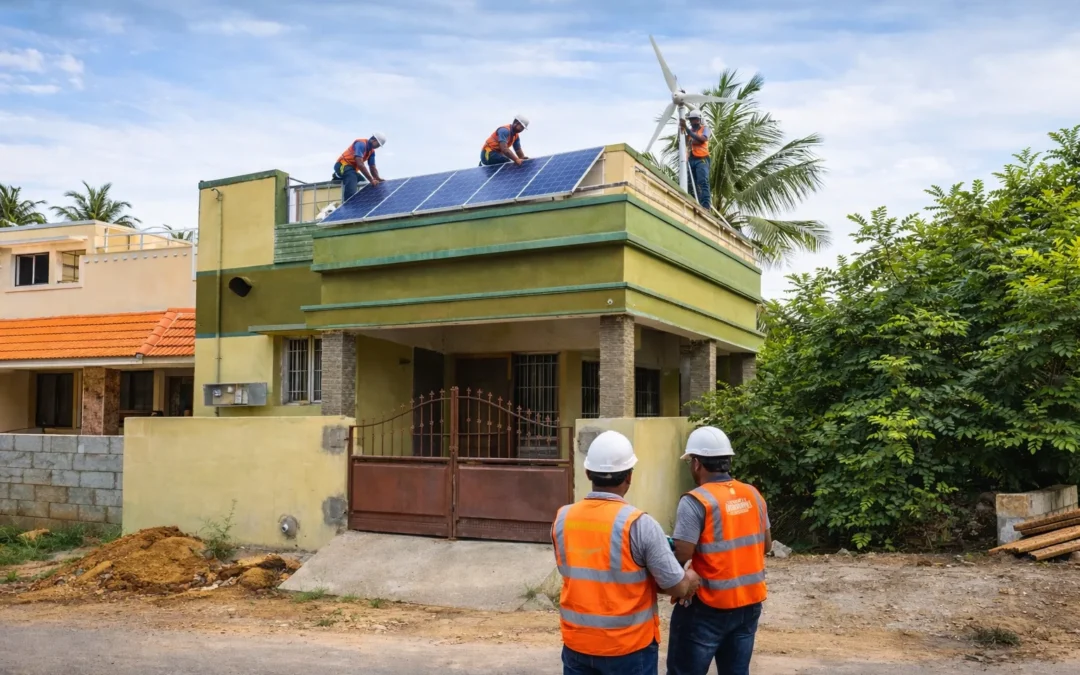
A smart budget for a hybrid energy project should be planned around actual load, backup hours, site suitability, battery need, inverter quality, safety, and installation, not only around equipment price.
That is important because a hybrid system is more than just solar panels or a wind turbine. It usually includes solar generation, wind generation, battery storage, inverter integration, protection devices, and installation work. If the budget is not planned properly, the system may end up too small for real needs or too expensive without enough extra value.
The goal is not to spend as little as possible. The goal is to spend in the right places so the project gives useful performance, dependable backup, and better long-term value.
Start With Your Real Requirement
The first budgeting rule is simple: do not start with product prices. Start with your actual need.
Before planning your budget, check:
- Your Daily Electricity Use
- Your Essential Circuits
- Your Peak Loads
- How Many Backup Hours You Want
This step matters because a small home that needs only basic backup should not be budgeted the same way as a larger house that wants wider support.
Your budget should follow the real need of the property.
Separate “Need” From “Optional”
One of the best budgeting methods is to divide the project into two parts:
What you truly need
- Essential Loads During Power Cuts
- Basic Daytime Renewable Support
- Minimum Required Battery Backup
- Safe Installation And Core Protections
What may be optional
- Longer Backup Hours
- Advanced Monitoring
- Extra Battery Capacity For Future Use
- Larger Wind Capacity Than The Site Can Use Properly
This helps avoid spending money on features that look attractive but do not add enough practical value.
Build the Budget Around Load and Backup Hours
In most hybrid projects, the biggest budget changes come from:
- How much load the system should support
- How long that load should stay ON during outages
For example:
- A system for lights, fans, router, and refrigerator will need a different budget from
- A system for broader household backup with longer battery support
The more ambitious the backup goal, the more carefully the battery part of the budget must be planned.
Do Not Spend Too Much on Capacity You Will Not Use
This is one of the most important budget tips.
Some buyers choose larger panels, bigger batteries, or a bigger turbine “just to be safe.” But a bigger system is not always a better investment.
Extra capacity only makes sense when:
- The House Will Actually Use It
- The Site Can Support It
- The Battery And Inverter Can Match It
- Future Plans Justify It
A good budget focuses on usable performance, not just bigger numbers.
Budget Solar Based on Roof and Daily Target
Solar is often the main daytime source in a home hybrid system, so it usually takes an important part of the budget.
A practical solar budget should consider:
- Usable Roof Area
- Shading Conditions
- Mounting Type
- Panel Quality
- Expected Daytime Contribution
Not every home can support the same solar capacity. The roof condition and the actual energy target should guide the spending.
Be Careful With Wind Turbine Budgeting
Wind can add strong value to a hybrid system, but it is also one of the most site-sensitive parts of the budget.
Before assigning a big budget to wind, check:
- Whether The Site Has Workable Airflow
- Whether Mounting Is Feasible
- Whether The Turbine Can Make A Real Contribution
A poor-site wind turbine can become one of the most expensive mistakes in a hybrid project.
So wind budgeting should always follow real site conditions, not just interest in adding a turbine.
Keep Battery Budgeting Practical
Battery cost can quickly become one of the biggest parts of the project budget.
That is why battery planning should stay practical.
A smart battery budget should ask:
- Which Loads Truly Need Backup
- How Many Hours Of Backup Are Needed
- What Battery Voltage Is Suitable
- Whether Future Expansion Is Likely
- Where The Battery Will Be Placed Safely
Try not to budget batteries only out of fear of outages. Budget them based on the actual continuity you want to maintain.
Do Not Underbudget the Inverter and Controller
Another common mistake is spending too much on panels or turbine capacity while keeping too little budget for the inverter and controller.
These parts manage:
- Solar Input
- Wind Input
- Battery Charging
- Power Flow
- Switching Logic
That means they are not secondary items. They are central to the full system.
A smart budget should properly include:
- Inverter Compatibility
- Controller Functionality
- Battery Voltage Design
- Integration Quality
Saving too much money here can reduce the performance of the whole project.
Reserve Budget for Safety and Protection
A hybrid project budget should never be built around generation equipment alone. Safety and protection are essential.
Your budget should also include:
- Isolators
- Earthing
- Protection Devices
- Safe Cable Routing
- Battery Safety Provisions
- Proper Installation Work
These items may not look exciting in a quote, but they protect the long-term value of the project.
Budget for Installation, Not Only Equipment
Another important tip is to keep a realistic budget for installation.
A hybrid project may need:
- Rooftop Solar Mounting
- Wind Mounting Or Support Work
- Cable Routing
- Electrical Panel Integration
- Safe Battery Placement
- Commissioning Support
So the budget should include installation quality, not only equipment price.
Leave Room for Monitoring and Future Upgrades
A good budget should also think ahead.
Possible future needs may include:
- Better Monitoring
- More Battery Capacity
- More Solar Panels
- Wider Load Support
You do not need to buy everything on day one, but it is smart to budget in a way that avoids expensive redesign later.
Compare Value, Not Just the Lowest Quote
One of the smartest budgeting tips is this: do not compare hybrid project quotes only by total price.
Instead, compare:
- Which Loads Each System Supports
- How Many Backup Hours Are Included
- Whether Wind Sizing Is Realistic
- Battery And Inverter Quality
- Protection Scope
- Installation Quality
- Future Readiness
A slightly higher quote may still be the better budget choice if it gives a more balanced and dependable system.
Use a Phased Budget if Needed
If the full budget is difficult at one time, a phased plan may be better than choosing the wrong system.
For example:
Phase 1
- Essential-load Support
- Core Solar Capacity
- Inverter And Controller
- Basic Battery Backup
- Protections And Safe Installation
Phase 2
- Wind Addition If Site Conditions Are Suitable
- More Battery Capacity
- Upgraded Monitoring
- Wider Circuit Support
This kind of step-by-step planning can help homeowners move forward without forcing under-sized or poorly balanced decisions.
A Simple Example
A house that wants backup only for:
- Lights
- Fans
- Router
- Refrigerator
should be budgeted very differently from a villa that wants longer backup and wider circuit support.
That is why hybrid budgeting should always begin with actual requirement, not with a fixed package idea.
A Simple Budget Planning Flow
You can use this practical flow:
Step 1: Define essential loads
Decide what really needs support.
Step 2: Fix your backup goal
Choose realistic backup hours.
Step 3: Review site suitability
Check solar roof condition and wind feasibility.
Step 4: Allocate budget by function
Split the budget into:
- Solar
- Wind
- Batteries
- Inverter/controller
- Protections
- Installation
Step 5: Avoid unnecessary over-sizing
Match capacity to use, not to fear.
Step 6: Keep room for safety and future growth
Do not spend the entire budget only on visible equipment.
FAQs
1. What is the first step in budgeting a hybrid energy project?
The first step is checking your actual load, essential circuits, and backup requirement.
2. Should I budget only by system kW size?
No. You should also budget for battery backup, inverter and controller, protections, installation, and site suitability.
3. Why is over-sizing a bad budget decision?
Because it can increase project cost without adding enough practical value for your actual usage.
4. Which part of the hybrid system affects budget the most?
Usually load requirement, battery backup hours, and solar or wind capacity have the biggest effect.
5. Should I include safety components in the budget from the beginning?
Yes. Earthing, isolation, protections, and safe installation should be part of the original budget.
6. Can I plan the hybrid project in phases?
Yes. A phased approach can help when the full budget is not available at once.
7. How do I compare two hybrid project quotes properly?
Compare supported loads, backup hours, component quality, protections, installation quality, and future readiness, not just total price.