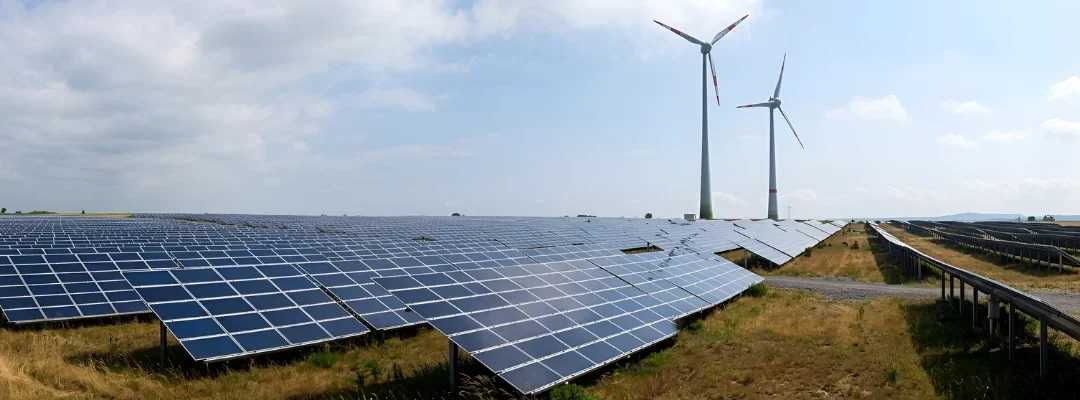
The cost of a hybrid solar wind system in India mainly depends on your load requirement, backup hours, solar size, wind suitability, battery bank size, inverter and controller selection, mounting work, safety protections, and installation complexity. It is not priced like a simple home appliance or a basic rooftop solar package.
A hybrid system is a customized energy solution. It combines solar panels, a wind turbine, battery storage, inverter integration, controllers, protections, and site-based installation planning into one coordinated setup. That is why the final price depends on much more than just kW size.
Why Hybrid System Cost Is Different from Standard Rooftop Solar
A basic rooftop solar system is usually easier to price because the design is more standard.
A hybrid solar wind system is different because it may include:
- Solar Generation
- Wind Generation
- Battery Backup
- Hybrid Inverter And Controller
- Structural And Mounting Work
- Electrical Protections
- Monitoring Features
- Site-specific Installation Planning
This makes hybrid system pricing more customized than simple rooftop solar pricing.
1. Load Requirement Is the First Cost Driver
The first factor affecting cost is the amount of power the system is expected to support.
Before pricing the system, you need to know:
- Daily Electricity Use
- Essential Loads
- Peak Usage
- Backup Hours Required
A system designed only for lights, fans, router, and refrigerator will cost much less than a system meant to support a larger part of the house.
That is why the price always starts with the real requirement of the property.
2. Solar Capacity Affects the Price
Solar is usually the main daytime source in a residential hybrid system, so the solar portion has a major effect on total cost.
Solar-related price factors include:
- Number Of Panels
- Panel Wattage And Brand
- Usable Roof Area
- Mounting Type
- Cable Length
- Installation Complexity
The more solar capacity the property can usefully support, the more the solar part of the project cost will increase.
3. Wind Turbine Size and Site Suitability Affect the Price
The wind part of the system is one of the biggest reasons hybrid pricing can vary from one house to another.
Important wind-related cost factors include:
- Turbine Capacity
- Tower Or Mounting Requirement
- Structural Support
- Vibration Considerations
- Service Access
- Actual Airflow At The Site
A wind turbine is not only an equipment cost. It can also increase structural and installation cost. If the site has weak airflow, adding a bigger turbine may increase price without giving matching value.
4. Battery Backup Requirement Has a Big Effect on Budget
Battery storage is one of the biggest cost drivers in a hybrid system, especially when backup is important.
Battery-related price factors include:
- Backup Hours Needed
- Number Of Essential Loads
- Battery Chemistry And Quality
- System Voltage
- Battery Bank Size
- Battery Placement And Ventilation
In simple terms, longer backup usually means a larger battery bank, and that can significantly increase the total project cost.
5. Inverter and Controller Selection Change the Total Cost
A hybrid system needs the right inverter and controller to manage solar, wind, charging, storage, and output to the house.
That means pricing is affected by:
- Inverter Capacity
- Hybrid Compatibility
- Battery Voltage Design
- Charging Logic
- Protection Coordination
- Future Expansion Readiness
A better-matched power electronics setup may cost more at the start, but it often improves system stability and long-term usefulness.
6. Mounting Structure and Civil Work Matter
Many buyers look only at the equipment price, but mounting and installation work also affect the final cost.
This may include:
- Rooftop Solar Mounting
- Wind Turbine Support Structure
- Foundation Or Reinforcement Work
- Civil Fixing
- Weatherproof Routing
- Service-access Planning
Two homes with the same electrical requirement can still have different total costs because the mounting work is different.
7. Electrical Protection and Safety Increase Quality and Cost
A hybrid system should not be priced only on generation equipment. Safety items are a necessary part of the project.
These may include:
- Isolators
- Earthing
- Surge Protection
- Wiring
- Battery Protection
- Safe Connection To Home Circuits
These items add cost, but they also improve safety and reliability. Removing them just to reduce price is not a smart decision.
8. Monitoring and Smart Features Can Change the Quote
Some homeowners want a basic hybrid system. Others want better visibility and smarter control.
This can affect cost through:
- Generation Monitoring
- Battery Status Display
- Remote Alerts
- Smart Switching
- Advanced Protection Logic
So the final quote may differ depending on whether the system is simple or more advanced.
9. Installation Complexity and Location Affect the Price
Hybrid system cost in India also changes based on where and how the system is installed.
This may include:
- Roof Height
- Difficulty Of Access
- Cable Routing Complexity
- Logistics
- Local Labor Requirement
- Distance For Service Support
That is why one hybrid quote cannot be compared directly with another unless the site and scope are similar.
10. Brand Quality and Component Reliability Affect Budget
A lower quote may not always mean better value. Component quality has a direct effect on both cost and long-term performance.
Better-quality components may cost more at first, but they can offer:
- More Dependable Operation
- Safer Installation
- Better Service Life
- Lower Risk Of Early Replacement
So it is better to compare value, not just the lowest number.
11. Correct Sizing Helps Control Cost
One of the smartest ways to control project cost is to avoid both under-sizing and over-sizing.
- If the system is too small, it may not support your need.
- If it is too large, the project cost may increase without clear benefit.
The goal is not to buy the biggest hybrid system. The goal is to buy the right-sized one.
12. Subsidy and Policy Can Affect the Solar Portion
For most residential buyers in India, the main central support path they usually check first is the grid-connected rooftop solar / PM Surya Ghar route. MNRE says Central Financial Assistance is available to residential electricity consumers under the rooftop solar programme, and the official PM Surya Ghar portal shows subsidy slabs of ₹30,000 per kW up to 2 kW, ₹18,000 per kW for the additional capacity up to 3 kW, capped at ₹78,000 total for larger eligible residential rooftop systems.
But this is the important part: those official pages are focused on residential rooftop solar. So if you are planning a solar + wind hybrid system, do not assume the entire hybrid package will be covered. The safest approach is to verify how your exact configuration is treated by the current PM Surya Ghar portal, your DISCOM, and the empanelled vendor before budgeting.
A Simple Example
A house that wants backup only for:
- Lights
- Fans
- Router
- Refrigerator
will usually need a smaller and lower-cost hybrid setup than a villa that wants longer backup for more loads, larger battery storage, and a more complex inverter arrangement.
That is why there is no single price that fits every home.
So, Is a Hybrid Solar Wind System Expensive?
It can cost more than a simple solar-only setup, but that is not the full picture.
A hybrid system may offer:
- Better Charging Continuity
- Improved Backup During Power Cuts
- Lower Grid Dependence For Selected Loads
- More Flexible Long-term Energy Planning
So the better question is not only “What is the initial price?”
It is also “What value does the system provide for my actual requirement?”
How to Budget More Smartly for a Hybrid Project
A practical budgeting approach is:
Step 1: Define essential loads
Know what the system must actually support.
Step 2: Decide backup hours
Battery cost depends heavily on this.
Step 3: Check solar and wind suitability
Do not pay for wind capacity that the site cannot use well.
Step 4: Ask for integrated sizing
Get a quote based on load, site, battery, and inverter matching.
Step 5: Verify subsidy correctly
Check the latest official rooftop-solar eligibility through the current portal and DISCOM instead of assuming the full hybrid system is covered.
Step 6: Compare value, not only price
Look at safety, serviceability, component quality, and long-term practicality.
FAQs
1. What affects hybrid solar wind system cost the most?
The biggest cost factors are load requirement, battery backup hours, wind turbine size, solar capacity, inverter/controller selection, and installation complexity.
2. Why is a hybrid system usually costlier than only solar?
Because it may include a wind turbine, battery storage, hybrid power electronics, extra structure, and more complex installation planning.
3. Does battery backup increase the cost a lot?
Yes. Battery bank size is one of the biggest cost drivers, especially when longer backup hours are needed.
4. Can the wind turbine part change the price significantly?
Yes. Wind turbine capacity, tower or mounting requirement, vibration control, and airflow suitability can all change the final cost.
5. Is there a subsidy in India for this type of system?
India’s main residential central support route is the rooftop-solar / PM Surya Ghar path for eligible residential rooftop solar. Hybrid buyers should verify how their exact configuration is treated before assuming full-project subsidy.
6. Why is correct sizing important for controlling cost?
Because under-sized systems may underperform, while over-sized systems can increase cost unnecessarily.
7. Should I compare only the lowest quote?
No. You should also compare component quality, safety, protection, serviceability, and how well the system is matched to your home.