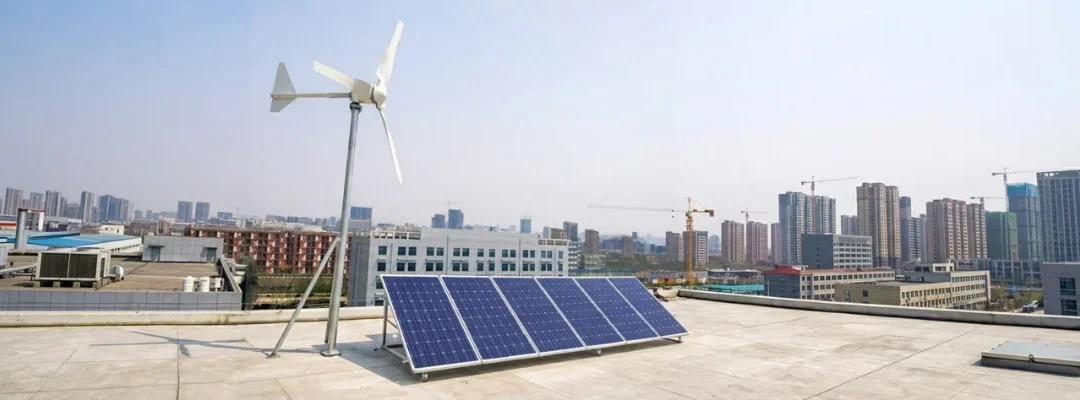
The size of a hybrid solar and wind system depends on more than just the number of solar panels or the kW rating of a wind turbine. The main factors are daily power use, backup hours, essential loads, solar exposure, wind conditions, battery size, inverter compatibility, site layout, and future expansion needs.
A hybrid system works well only when all these parts are planned together. If one part is chosen without considering the others, the system may underperform or cost more than necessary. That is why sizing should always be based on real property conditions and actual energy needs.
1. Daily Energy Consumption
The first and most important factor is your daily electricity use.
Before sizing the system, you need to know:
- How Many Units Of Electricity Your Home Uses
- Which Appliances Run Daily
- When Major Loads Are Used
- How Much Of That Usage The Hybrid System Should Support
This matters because every home is different. A small house with lights and fans will need a different system from a larger home with refrigerator, CCTV, internet equipment, and longer backup needs.
Without knowing your real energy use, proper sizing is not possible.
2. Essential Loads and Backup Requirement
Not every hybrid system is meant to run the full house. In many cases, it is planned mainly around essential loads and backup hours.
You need to decide:
- Which loads must stay ON during power cuts
- How long they should run
- Whether the goal is basic essential backup or broader household support
Common essential loads may include:
- Lights
- Fans
- Wi-Fi router
- CCTV
- Refrigerator
- Charging points
- Selected work-from-home equipment
The more loads you want to support, and the longer you want them to run, the larger the system and battery bank will need to be.
3. Solar Exposure and Roof Conditions
Solar is usually the main daytime source in a hybrid system, so roof conditions and solar exposure directly affect system size.
Important solar-related factors include:
- Roof Direction
- Shading
- Available Roof Area
- Local Sunlight Conditions
- Practical Installation Angle
Two homes with the same load may still need different solar sizing if:
- One Has Better Sunlight
- One Has Shade From Buildings Or Trees
- One Has Limited Panel Space
So solar sizing is not based only on load. It also depends on how much practical solar generation the property can support.
4. Wind Speed and Airflow Quality
Wind is another major sizing factor, but it is even more site-dependent than solar.
Important wind-related factors include:
- Average Wind Speed In The Area
- Wind Quality At Turbine Height
- Nearby Obstructions
- Turbulence From Buildings Or Trees
- Safe Mounting Height
A wind turbine should never be chosen only by brochure rating. A large turbine in a weak-airflow site may contribute far less than expected.
That is why actual wind conditions at the property matter more than rated kW alone.
5. Property Layout and Mounting Feasibility
Even if the load requirement is clear, the system can only be sized properly if the property supports the installation.
This includes:
- Roof Space For Solar Panels
- Suitable Structure Or Area For Wind Turbine Mounting
- Clear Airflow Exposure
- Battery Placement Area
- Inverter/controller Location
- Safe Access For Maintenance
A home with limited space or difficult mounting conditions may need a different system balance than a property with open area and easier installation options.
6. Type of Home and Usage Pattern
The type of home also affects system size.
For example:
- A Small House May Need Only Essential-load Support
- A Medium-size Home May Need Broader Backup
- A Villa Or Farmhouse May Need Larger Backup And Higher Capacity
- A Remote Property May Depend More On Battery Storage And Renewable Continuity
The system should match the real scale of the property and its daily power pattern.
7. Battery Storage Requirement
Battery storage is a major part of hybrid system sizing because it affects how long the system can support loads during outages or low-generation periods.
Important battery sizing factors include:
- Required Backup Hours
- Essential Load List
- System Voltage
- Charging Pattern
- Available Space
- Future Expansion Plans
Battery size should not be selected alone. It must match both the load requirement and the renewable sources that will charge it.
8. Inverter and Controller Compatibility
A hybrid system should be sized as one integrated setup, which means the inverter and controller are very important.
They affect:
- How Solar Input Is Handled
- How Wind Input Is Managed
- How Batteries Are Charged
- How AC Loads Are Supplied
- How Stable The Full System Remains
Even a good balance of solar and wind may not perform properly if the inverter or controller is not matched correctly.
9. DC Voltage and System Configuration
The DC voltage of the system also affects sizing.
Depending on the project, the system may use:
- 12V
- 24V
- 48V
This matters because voltage selection affects:
- Battery Configuration
- Cable Sizing
- Inverter Matching
- Charging Behavior
- Overall System Stability
So system voltage is not a small detail. It is an important part of correct hybrid sizing.
10. Expected Role of the Wind Turbine
In many home hybrid systems, solar remains the main daytime source, while wind acts as a supporting source.
That means the system should be sized based on the real role wind is expected to play.
For example:
- Is Wind Mainly For Battery Charging Support?
- Is It Expected To Contribute To Daily Energy Use?
- Is It Mainly There To Improve Backup Continuity?
- Is The Site Actually Suitable For Stronger Wind Contribution?
The answer affects how much wind capacity should be included.
11. Seasonal and Weather Variation
A hybrid system works across changing weather conditions, so seasonal variation also affects sizing.
This includes:
- Rainy Or Cloudy Periods
- Seasonal Sunlight Changes
- Variation In Wind Behavior
- The Need For Stable Performance Across The Year
A smart system is not sized only for the best solar day or the strongest wind period. It should be sized for practical year-round use.
12. Future Expansion Plans
Another important factor is whether the homeowner may want to expand later.
Possible future changes include:
- Adding More Battery Capacity
- Increasing Solar Capacity
- Improving Monitoring
- Supporting More Loads Later
If expansion is likely, the first system design should make that possible without major redesign later.
13. Budget and Value Expectation
Budget always affects system size, but it should be handled carefully.
The goal should not be:
- Making the system too small just to cut cost
- Making it too big just to feel safer
The right size is usually the one that gives the best practical value.
That means the system should be balanced for the money spent, not simply chosen by lowest price or highest rating.
14. Quality of Integration
One of the most overlooked factors is integration quality.
A hybrid system is not sized properly unless:
- Solar, Wind, Battery, And Inverter Are Matched
- Charging Behavior Is Understood
- Protections Are Planned
- The Whole Setup Works As ONE Complete System
Even correctly sized components can perform poorly if the integration is weak.
A Simple Example
Two houses may use similar daily electricity, but they may still need different hybrid system sizes.
For example:
- One House May Have Strong Solar Exposure And Weak Wind
- Another May Have Better Airflow And More Open Space
- One May Want Only Short Backup
- Another May Want Longer Support For Essential Loads
That is why hybrid sizing should always be based on actual site and usage conditions, not only on daily units.
Why All These Factors Must Be Considered Together
The biggest mistake in hybrid system planning is looking at each part separately.
In reality:
- Load Affects Battery Size
- Battery Affects Inverter Selection
- Solar Exposure Affects Solar Sizing
- Wind Quality Affects Turbine Sizing
- Property Layout Affects What Can Be Installed Safely
FAQs
1. What is the most important factor in hybrid system sizing?
The most important factor is the actual daily load and the essential circuits you want the system to support.
2. Does roof direction affect solar sizing in a hybrid system?
Yes. Roof direction, shading, and available roof space all affect how much useful solar generation the property can support.
3. Why is wind speed important in hybrid sizing?
Because wind turbine performance depends on actual wind conditions at the property, not just on the turbine’s rated kW.
4. How does battery requirement affect hybrid system size?
Battery requirement affects how much storage is needed for backup and also influences inverter selection and charging planning.
5. Can two houses with the same load need different hybrid system sizes?
Yes. Differences in solar exposure, wind conditions, roof area, and backup expectation can lead to different system sizes.
6. Does future expansion matter while sizing the initial system?
Yes. If future expansion is likely, the system should be planned so it can grow without major redesign.
7. Why is integration important in hybrid sizing?
Because a hybrid system works properly only when solar, wind, battery, and inverter are sized and matched together.