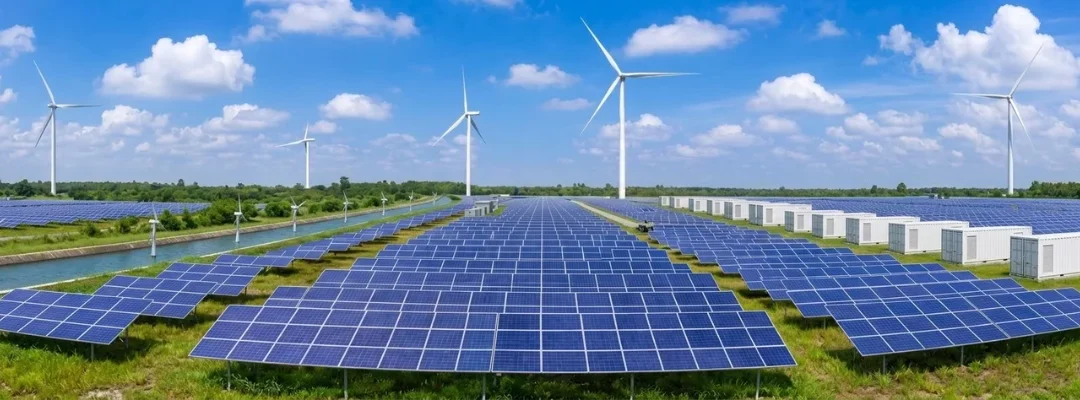
More property owners are now looking at renewable energy not just for savings, but also for better backup and more reliable daily power support. That is why the question is no longer only “Should I use renewable energy?” It is now “Which renewable system is the smarter choice?”
A hybrid energy system is often smarter than a single-source renewable system because it uses more than one source of power in one planned setup. Instead of depending only on solar or only on wind, a hybrid system combines solar panels, a wind turbine, battery storage, and an inverter so they can work together. This gives the system better flexibility, improved charging support, and a more balanced energy flow under changing conditions.
That does not mean single-source systems are always a bad choice. Solar-only and wind-only systems can still work well in the right places. But when the goal is a more adaptable and reliable energy setup, hybrid systems often make more sense.
What Is a Single-Source Renewable System?
A single-source renewable system depends mainly on one energy source.
Examples include:
- A Solar-only Power System
- A Wind-only Power System
- A Battery-backed System Charged By Only ONE Source
These systems can work well in the right situation. But because they rely on one main source of generation, their performance is tied directly to the strengths and limits of that source.
That is the main difference.
A single-source system may be simpler, but it is also more dependent on one operating pattern.
What Makes a Hybrid Energy System Different?
A hybrid energy system combines more than one source of generation in one coordinated design. In a solar + wind hybrid setup, solar panels and a wind turbine both support power generation, while the controller, battery, and inverter help manage charging, storage, and power delivery.
This is what makes the system smarter. It is not only about having more equipment. It is about making the whole energy setup more balanced.
For example:
- Solar Can Support Daytime Generation
- Wind May Contribute When Sunlight Is Low, If The Site Has Usable Airflow
- Batteries Can Store Extra Energy For Later Use
- The Inverter Supplies Usable AC Power To The Property
When these parts are planned properly, the system becomes more flexible than relying on only one source.
Why Single-Source Systems Have Limits
Every renewable source has benefits, but every source also has limitations.
Solar-only systems
Solar is practical and widely used, but it depends on sunlight. It performs best during the day, reduces in cloudy weather, and does not generate power at night.
Wind-only systems
Wind can generate power outside daylight hours, but it depends on actual site airflow. If the site does not have steady and usable wind, output can become inconsistent.
Battery-backed single-source systems
A battery helps with backup, but it still needs regular charging. If charging depends only on one energy source, performance may become limited during weak conditions.
This is why many users find that a single-source system does not always match real-world energy needs.
Why Hybrid Systems Are Smarter
A hybrid energy system is smarter because it does not depend fully on one source.
If solar output is low, wind may still contribute. If wind is weak, solar may still support daytime loads. If both are temporarily limited, a properly sized battery can help support selected circuits.
This gives the system more than one chance to generate or store energy.
That is a more practical way to design for real-life power use.
More Stable Energy Support
One of the biggest reasons hybrid systems are smarter is that they offer more stable energy support.
A single-source system follows one generation pattern only. A hybrid system uses more than one pattern.
- Solar works best in the daytime
- Wind may help during other hours depending on the site
- The battery stores extra energy for later use
This makes the overall system more useful across different times of the day instead of depending on only one energy window.
For many properties, that is a major advantage.
Better Battery Charging
Battery charging is a key part of a smart energy setup, especially where backup is important.
A hybrid system gives the battery more than one possible charging source. Instead of depending only on sunlight, the battery may also receive support from wind when conditions allow.
This can help improve:
- Charging continuity
- Backup readiness
- Battery usability
- Overall system flexibility
In simple terms, better charging makes the system more practical.
Better Support During Power Cuts
A smart energy system should be useful during power cuts, not only during normal conditions.
A hybrid system is often better prepared for this because it combines battery storage with more flexible renewable charging support.
This can help keep important loads active, such as:
- Lights
- Fans
- Wi-fi Router
- Cctv
- Refrigerator
- Charging Points
- Selected Work-from-home Equipment
The goal is not always to run the entire property. In many cases, the real goal is to keep essential loads running until normal power conditions return.
Reduced Dependence on One Weak Point
Every single-source system has one major weak point.
- Solar-only depends on sunlight
- Wind-only depends on airflow
A hybrid system reduces this kind of dependence because one source does not have to do all the work alone.
This does not mean constant power in every situation. It means the system is less exposed to the limitation of only one source.
That makes it a smarter setup for everyday use.
Better Practicality Across the Year
Energy conditions do not stay the same throughout the year. A single-source system may feel strong in one season and weak in another.
A hybrid system has the advantage of using two renewable sources, which can help improve balance across different seasons and changing weather conditions.
That makes it more practical for users who want a system that supports them over the long term, not only during ideal periods.
A Simple Example
Imagine a property that needs support for:
- Lights
- Fans
- Router
- Cctv
- Refrigerator
In a solar-only setup, power support depends mainly on daylight and stored battery energy after sunset.
In a hybrid setup, solar can support daytime use, wind may help when available, and the battery stores energy for later use. This gives the property a more flexible and balanced energy system.
That is why many users see hybrid as the smarter option.
Smarter Planning, Not Just More Equipment
Many people think a hybrid system is simply a larger system. But the real intelligence of a hybrid setup comes from planning.
A smarter system is not the one with the biggest panel count or the largest battery. It is the one where:
- The load is understood clearly
- Solar capacity matches actual usage
- wind contribution is based on real site conditions
- the battery is sized for the required backup
- the inverter and protections are selected properly
That is what makes hybrid system design smarter.
Reduced Battery Stress and Better Long-Term Use
A hybrid system can also reduce stress on the battery and overall system when designed correctly.
This can happen because:
- The battery may receive charging from more than one source
- The system is not waiting only for one charging window
- Power flow can be managed more effectively
- The load burden can be shared more intelligently
In long-term use, that can lead to better system stability and more practical service life.
Are Single-Source Systems Still Good?
Yes. A single-source system can still be the right choice in many situations.
Solar-only may be better when:
- Solar Exposure Is Strong
- Wind Conditions Are Poor
- The Main Goal Is Daytime Energy Support
- The Budget Needs To Stay Simpler
Wind-only may be better when:
- The Site Has Very Good Airflow
- Mounting Conditions Are Suitable
- Wind Can Contribute Meaningfully
But when the goal includes savings, backup, charging continuity, and better energy flexibility, a hybrid system often becomes the smarter solution.
Why Site Conditions Still Matter
A hybrid system is smarter only when the site supports it.
For example:
- Solar Needs Good Sunlight Exposure
- Wind Needs Workable Airflow
- Batteries Need Safe Placement
- The System Needs Proper Electrical Planning
If wind conditions are poor, the hybrid advantage may be reduced. That is why proper site assessment is still important.
So the right conclusion is not that hybrid is always best.
The right conclusion is this:
Hybrid is often the smarter choice when both the site and the energy requirement justify it.
FAQs
1. Why is a hybrid energy system smarter than a solar-only system?
Because it does not depend only on sunlight. Wind may also contribute when conditions allow, which improves flexibility and charging support.
2. Is a hybrid system always better than a single-source system?
No. It is better when the site supports both sources and the owner wants a more flexible renewable setup.
3. How does a hybrid system reduce battery stress?
It can improve charging opportunities from more than one source and help manage power flow more effectively.
4. What is the biggest smart advantage of a hybrid system?
The biggest advantage is balanced energy support from multiple sources instead of dependence on only one.
5. Are hybrid systems useful during power cuts?
Yes. With batteries and a backup-capable inverter, they can support essential loads during outages.
6. Can a solar-only system still be the right choice?
Yes. If wind conditions are poor and the main goal is simpler daytime support, solar-only may be the better fit.
7. Why does integration matter in a hybrid system?
Because performance depends on how well solar, wind, battery, inverter, and protections work together as one system.