Automotive Assembly Line Automation with AMR
Synergy Automatics provides AMR solutions for automotive assembly line logistics to improve parts delivery, line-side replenishment, kit movement, WIP transfer, and internal material flow. Our AMR-based solutions help reduce manual handling, minimise line stoppages, improve delivery accuracy, and support smoother automotive production operations.
Automotive assembly plants require continuous movement of parts, sub-assemblies, tools, kits, components, and WIP materials between stores, supermarkets, kitting areas, assembly stations, inspection zones, and dispatch points. When these movements are handled manually using workers, trolleys, tugger carts, or forklifts, it can lead to delays, wrong part delivery, traffic congestion, operator fatigue, and production loss.
Autonomous Mobile Robots help solve these challenges by automating parts movement, sequenced line-side replenishment, kit transfer, and sub-assembly transport. Synergy Automatics designs AMR solutions based on assembly line flow, part sequence, load type, route distance, station requirement, takt time, safety needs, and workflow integration.
Automotive Assembly Challenges
- Late parts delivery can stop the assembly line and affect production output.
- Wrong part variants reaching the wrong station can cause rework and quality issues.
- Manual tugger or trolley movement increases dependency on operators.
- Line-side replenishment delays disturb takt time and production planning.
- Mixed-model assembly needs proper part sequencing to avoid station-level errors.
- Kitting areas can become congested due to manual trolley and material movement.
- Forklift and pedestrian traffic in production aisles creates safety risks.
- Manual material flow makes it difficult to track movement status in real time.
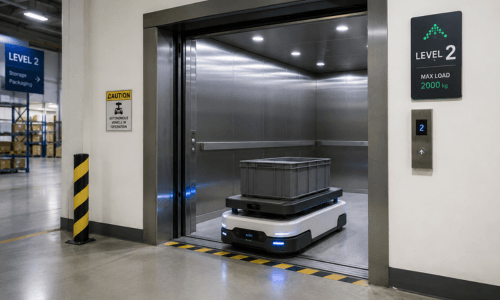
AMR Applications for Automotive Assembly
Sub-Assembly & Parts Delivery
AMRs can move sub-assemblies, components, spare parts, tools, and production materials from storage or supermarket areas to assembly line stations. This reduces manual transport, improves part availability, and helps avoid production delays caused by late material delivery.
Sequenced Line-Side Replenishment
AMRs support sequenced delivery of parts to line-side locations based on production flow and station requirements. This helps reduce wrong part movement, improves mixed-model assembly support, and maintains better alignment with takt time.
Vehicle Parts Kitting & Kit Movement
AMRs can transport prepared kits from kitting areas to assembly stations in a controlled and planned flow. This helps reduce kit movement errors, avoid line-side confusion, and improve material readiness for different vehicle models or product variants.
WIP & Inter-Station Material Transfer
AMRs can support work-in-progress material movement between assembly stations, inspection areas, testing zones, and rework points. This improves internal flow and reduces manual trolley dependency between production stages.
Line-Side Empty Bin & Return Movement
AMRs can collect empty bins, totes, trays, and returnable containers from assembly stations and move them back to storage, supermarket, or refill areas. This helps keep line-side areas clean, organised, and ready for continuous production.
Benefits of Automotive Assembly AMR
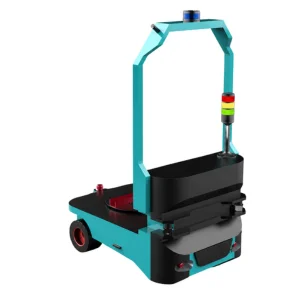
Reduces manual movement of parts, kits, bins, and WIP materials
Improves assembly line feeding and part availability.
Minimises wrong part movement and variant mismatch errors.
Supports sequenced replenishment for mixed-model production lines.
Helps reduce line stoppages caused by delayed material delivery.
Reduces forklift, trolley, and tugger traffic in production aisles.
Improves safety by reducing manual handling and vehicle movement risks.
Keeps line-side areas organised with return bin and empty container movement.
Improves real-time visibility of material movement tasks & Supports scalable automation for future automotive production expansion.
Why Choose Synergy Automatics
Synergy Automatics provides application-focused AMR solutions for real automotive assembly logistics challenges.
We support AMR planning for parts delivery, sequenced replenishment, kitting movement, WIP transfer, and empty bin return operations.
We focus on on-time project delivery with proper planning, installation, testing, and support.
We study your production layout, station flow, part movement, line-side requirement, route distance, load type, and daily movement volume before planning the solution.
We provide quality materials and reliable automation components to support long-term performance.
We offer code customization and workflow customization based on your production process and system requirements.
Our solutions are designed to fit your existing automotive assembly workflow and support future factory automation expansion.
FAQ for Automotive Assembly AMR
1. How does AMR help in assembly line feeding?
AMR helps deliver materials to assembly stations on time, reducing manual movement and helping prevent line stoppages caused by delayed part supply.
2. Can AMR support sequenced part delivery?
Yes, AMR can support sequenced line-side replenishment based on production flow, part sequence, and station-level material requirements.
3. Can AMR reduce wrong part delivery?
Yes, AMR can reduce wrong part movement when planned with proper task control, pickup-drop mapping, barcode/RFID support, and workflow integration.
4. Is AMR suitable for automotive kitting operations?
Yes, AMR is suitable for moving prepared kits from kitting areas to assembly stations, helping improve kit flow and reduce manual trolley dependency.
5. Can AMR move WIP materials?
Yes, AMR can move WIP materials between assembly stations, inspection zones, testing areas, rework points, and storage locations.
6. Can AMR collect empty bins from line-side areas?
Yes, AMR can collect empty bins, totes, trays, and returnable containers from line-side stations and move them back to refill or storage areas.
7. Can AMR work with existing automotive assembly lines?
Yes, AMR can be planned for existing assembly lines after studying aisle width, route distance, traffic flow, pickup points, drop points, and safety needs.
8. Does AMR need fixed tracks in automotive plants?
Most AMRs do not need fixed tracks, but they require route mapping, safe movement planning, pickup-drop configuration, and workflow setup.
9. Can AMR integrate with MES or ERP systems?
Yes, AMR systems can integrate with MES, ERP, or production software for task creation, material movement tracking, and better line-side visibility.