
Wind turbine for home
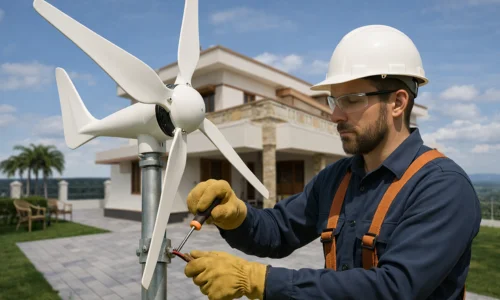
Synergy Automatics designs and implements home wind turbine systems in India based on your site wind conditions, household energy needs, and backup/hybrid goals. We support homeowners, villas, farmhouses, and independent properties with the right turbine selection, safe mounting design, and complete electrical integration—from planning to commissioning.
Home Wind Energy Solutions for Residential Properties
A properly designed home wind turbine system can support energy savings, backup readiness, and renewable power generation for suitable locations. Synergy Automatics develops project-ready solutions for homeowners planning wind power at home with a focus on performance, safety, and service life.

Our scope includes:
Site-based system planning
Turbine type selection
Mounting and structural coordination
Support for hybrid and battery-based systems
Whether the requirement is a compact setup or a larger domestic wind turbine installation, the system is built around real household load needs (essential circuits, backup goals, and available mounting options).
Benefits of Wind Energy for Homes
A well-planned wind system offers long-term value when installed in locations with suitable airflow and proper mounting height. For many residential properties, wind energy delivers the best results when it is planned as part of the overall energy system, not treated as a standalone product.
Reduced dependence on grid supply for selected loads
Renewable support for backup and battery charging
Better energy continuity during windy weather conditions
Strong option for open plots, farmhouses, and independent villas
Practical integration with solar in a domestic wind power system
Designed performance for long-term home wind energy goals
For the right property, wind energy for homes can improve daily energy reliability and support a smarter power strategy.

Turbine Options for Residential Use
Synergy Automatics supports multiple turbine configurations based on project size, airflow pattern, and installation feasibility.
Vertical Axis Turbine
- Compact residential layouts
- Controlled rooftop applications (after structural/vibration checks)
- Hybrid support systems
Horizontal Axis wind mill
- Farmhouses and villas
- Open-plot residential projects
- Pole or tower-mounted installations
System Configurations
Synergy Automatics designs systems based on the intended use of the generated power and the available electrical infrastructure.
On-Grid Configuration
A grid-connected setup is suitable for homeowners who want renewable power support during regular usage hours. This format helps manage wind power for a home with direct integration into the existing electrical network (subject to local rules and site feasibility).
Off-Grid Configuration
An off-grid setup uses battery storage and is ideal for backup-focused applications or areas with unstable supply. This is a practical choice for properties planning domestic wind power generation with energy storage support.
Hybrid Solar + Wind Configuration
Hybrid systems combine wind and solar for more balanced generation across different times of the day. For many projects, this is the most reliable format for a domestic wind power generator setup, especially where continuity is a priority.
Sizes and Capacity Options
Synergy Automatics supports residential wind systems from compact backup setups to higher-capacity installations. The right size depends on your monthly power usage, essential loads, and whether the system is planned for backup or hybrid use.
Our scope includes:
- 1kW – light loads and basic backup support
- 2kW – moderate household use and battery charging
- 3kW – mid-level residential support
- 5kW – larger homes, villas, and hybrid systems
Safety, Mounting, and Integration Notes
To keep residential systems reliable and safe, planning must cover:
Mounting strength, vibration control, and safe clearances
Electrical protections (isolation, surge/lightning protection as required)
Cable routing, earthing, and safe shutdown approach (as per turbine design)
Inverter/battery compatibility for backup and hybrid setups
Commissioning checks and handover documentation
Cost Planning and Project Scope
Installing a solar system isn’t just about fixing panels to a roof — it’s about maximizing performance, safety, and long-term returns. Poor installation can lead to energy loss, safety risks, or rejection by grid authorities.Here’s why hiring a professional solar installer in Chennai makes all the difference:
Accurate Tilt & Orientation – Ensures your panels capture maximum sunlight
Roof Safety & Structural Integrity – Prevents long-term damage or leaks
Proper Wiring & Load Balancing – Avoids overheating, shorts, and inverter errors
TANGEDCO Compliance – Ensures your system gets approved for net metering without delays
Warranty Validity – Manufacturer warranties require certified installation
Investing in solar is long-term — and expert installation ensures it pays off.

Why Choose Synergy Automatics for home wind turbine
Synergy Automatics offers engineering-focused support for residential renewable projects with a strong emphasis on planning, safety, and long-term usability.
Site-based recommendations instead of generic product selling
Proper sizing support for residential and hybrid systems
Structured integration for storage and inverter systems
Mounting and vibration control planning
Service-oriented support after installation
We support solutions for windmills for houses, villas, and farmhouse projects where airflow and installation conditions are suitable.
FAQ - wind mill for houses
1) Can a wind turbine power a home?
Yes, a wind turbine can support home power needs, but the actual output depends on wind conditions, turbine size, mounting height, and system design.
2) Is a home wind turbine suitable for every house?
Not always. A home wind turbine can be considered for many houses, but performance depends on airflow at the location. Homes in open areas with good wind movement usually get better results, while crowded areas with nearby buildings and trees may reduce performance.
3) What size wind turbine do I need for my house?
The right size depends on your monthly electricity usage, essential loads, and whether you need backup or hybrid support. Common residential sizes are 1kW, 2kW, 3kW, and 5kW.
4) Is a rooftop wind turbine a good option?
A rooftop wind turbine can work in some cases, but rooftop airflow must be checked carefully. Structural strength and vibration control are also important.
5) Which is better for homes: vertical or horizontal wind turbine?
It depends on the site. Vertical types may suit compact or variable-airflow locations, while horizontal types are often preferred for open areas with cleaner wind flow.
6) Can wind and solar be used together in one home system?
Yes. A hybrid system can combine wind and solar to improve generation support across different times of the day.
7) Is a small wind turbine for house use enough for backup?
A small wind turbine for house use can be enough for essential backup circuits, especially when paired with batteries.
8) Does a domestic wind turbine need batteries?
Not always. An on-grid setup may not need batteries, but off-grid and backup-focused systems usually require battery storage.
9) How do I know if my property is suitable for a domestic wind power system?
Start with a site review: check airflow, obstacles, mounting options, and your power requirement. A proper assessment helps decide the right system type and size.