Vacuum Conveyor System manufacturer in India
In modern manufacturing and process industries, the need for clean, efficient, and dust-free material handling is more important than ever.
Synergy Automatics, a leading manufacturer and supplier of Vacuum Conveyor Systems in India, provides advanced pneumatic conveying solutions designed for transferring powders, granules, and bulk solids safely and efficiently.
Our systems ensure hygienic, enclosed, and contamination-free transfer, making them ideal for food, pharmaceutical, chemical, plastic, and agricultural industries.
Engineered for performance, durability, and automation, our vacuum conveyors guarantee zero spillage, reduced downtime, and higher productivity.
What Is a Rotator Conveyor?
A rotator conveyor (also known as a product rotation conveyor or conveyor with rotation mechanism) automatically turns materials while moving along the conveyor path.
Unlike flipping conveyors, which invert items completely, rotator conveyors adjust the product’s orientation or direction for labeling, sealing, or sorting.
This technology is essential in industrial automation, especially in packaging, automotive, FMCG, and logistics sectors, where rotational accuracy and line continuity are key for productivity.
Types of Vacuum Conveyor Systems
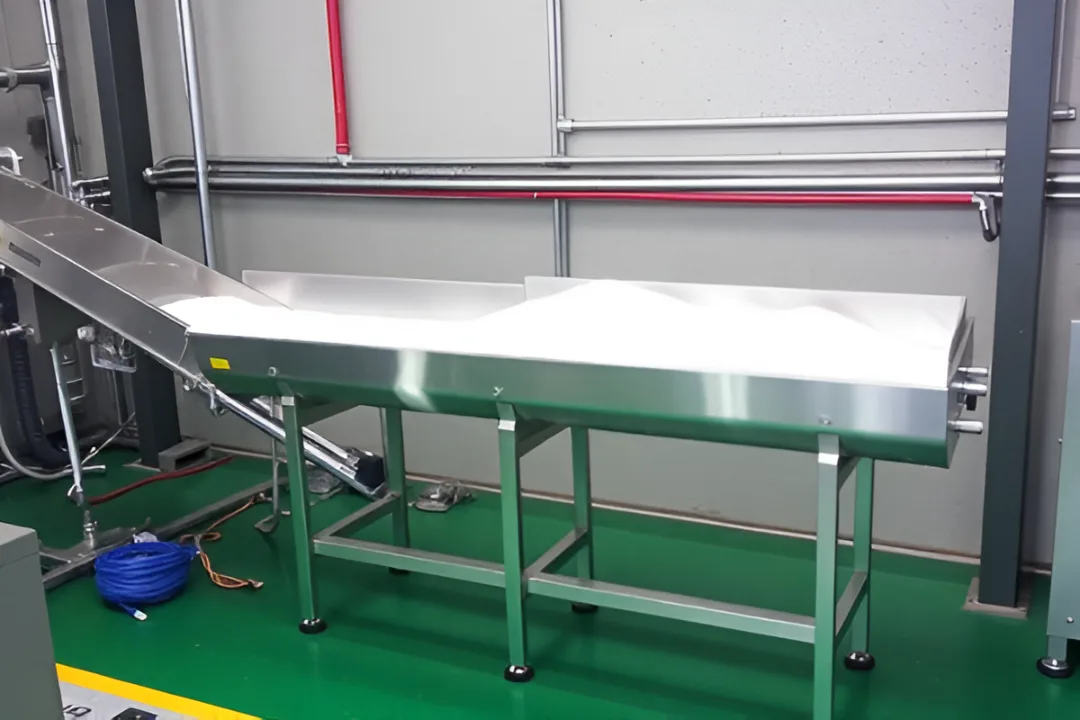
Vacuum Conveyor for Powders
These conveyors are specifically designed for fine, dry, and lightweight powders that require dust-free transfer and hygienic handling.
They use stainless-steel construction, antistatic hoses, and high-efficiency filters to safely move materials such as flour, milk powder, spices, sugar, starch, cement, and pharmaceutical powders.
Technical Highlights:
- Enclosed system ensures zero powder leakage.
- Integrated pulse jet filter prevents clogging and ensures consistent airflow.
- Smooth interior surfaces minimize product build-up.
Best for: Food, pharmaceutical, and chemical industries where hygiene and purity are critical.
Vacuum Conveyor for Granules & Pellets
Designed to handle medium- to high-density materials such as plastic granules, resin pellets, fertilizer, or polymer beads.
The gentle conveying action prevents material degradation and dust formation, ensuring a smooth feed into extruders, injection molding machines, or hoppers.
Technical Highlights:
- Heavy-duty design with higher vacuum capacity.
- Adjustable conveying speed for various granule sizes.
- Compatible with rotary valves or cyclone separators for large-scale systems.
Best for: Plastic, polymer, fertilizer, and agriculture industries.
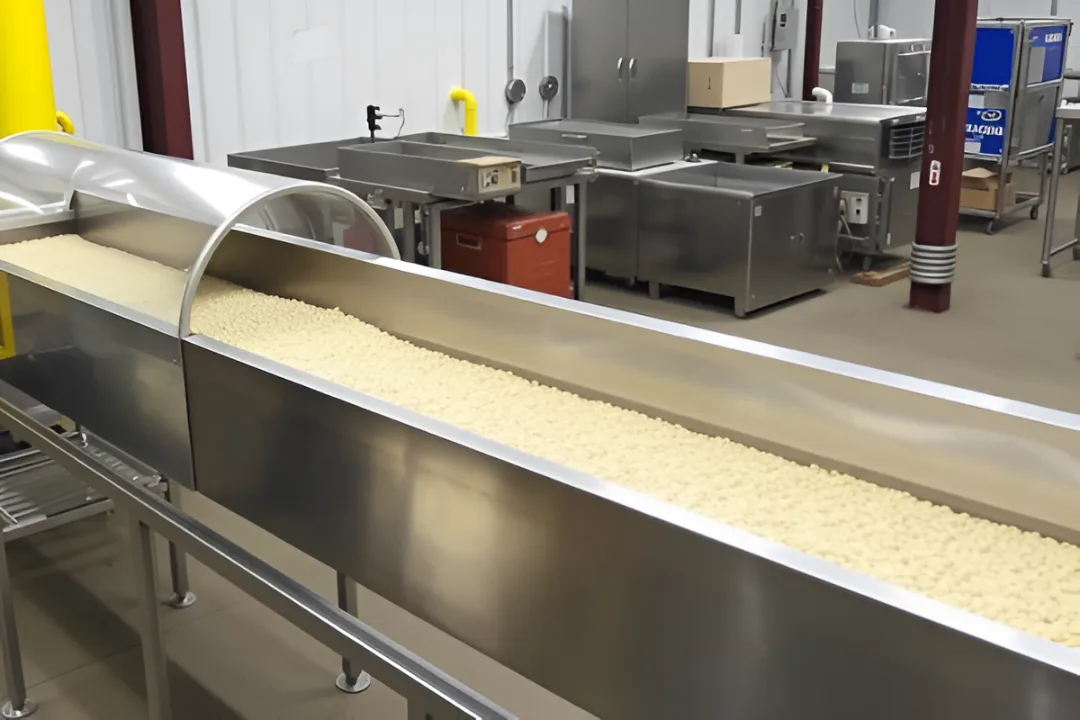

Servo Rotator Conveyor
A pneumatic vacuum conveyor operates using compressed air or side-channel blowers to generate suction pressure.
It is ideal for long-distance conveying and for materials with varying particle sizes.
Unlike mechanical conveyors, pneumatic vacuum systems are fully enclosed, making them safer, cleaner, and more efficient.
Technical Highlights:
- Long conveying distances (up to 50 meters).
- Low energy consumption per kg of material transferred.
- Modular design for easy maintenance.
Best for: Continuous industrial processing, chemical plants, and high-volume powder transfer.
Automatic Vacuum Transfer System
This system integrates PLC/HMI-based controls for fully automated, repeatable conveying cycles.
Material transfer, discharge, and filter cleaning are synchronized for seamless production — reducing operator involvement and improving reliability.
It can be linked directly to mixers, blenders, or packaging lines for batch or continuous operation.
Technical Highlights:
- Touchscreen HMI for easy configuration.
- Sensor-based level detection for automatic start/stop.
- Real-time monitoring with alarm and safety interlocks.
Best for: Fully automated production setups in food, pharma, and chemical industries.
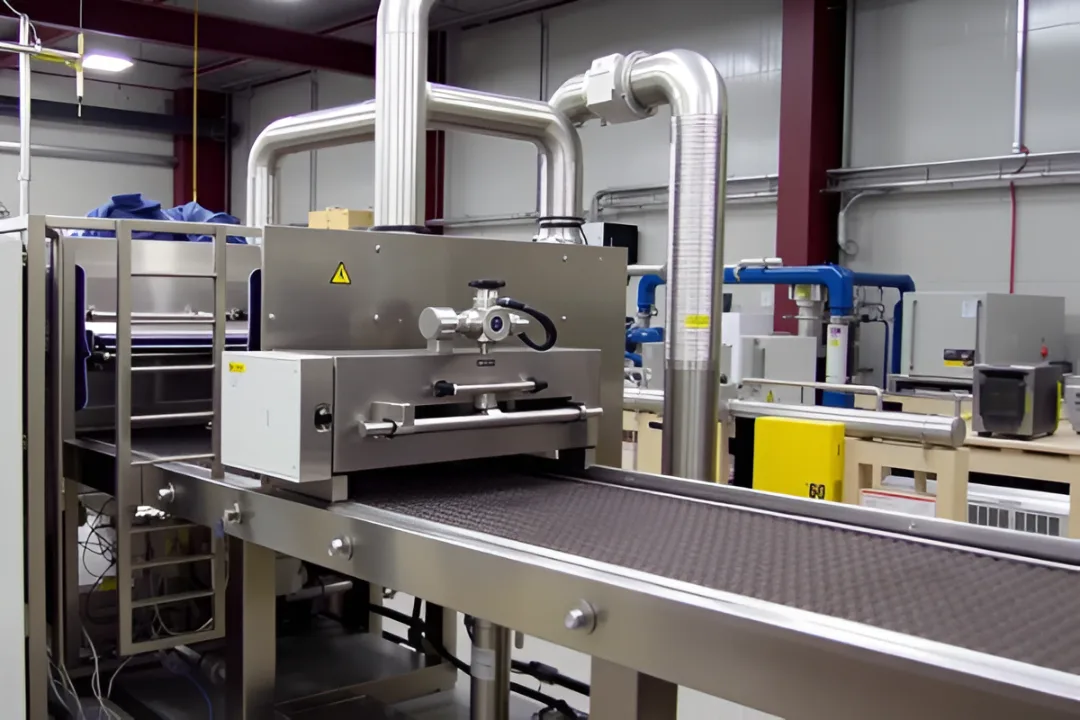

Stainless Steel (SS304 / SS316) Vacuum Conveyor
Manufactured with food- and pharma-grade stainless steel, these conveyors meet GMP and FDA standards.
They are corrosion-resistant, easy to clean, and suitable for handling hygienic or corrosive materials.
Equipped with tri-clamp fittings, they allow quick disassembly for cleaning and validation.
Technical Highlights:
- Smooth, polished surfaces prevent material residue.
- Optional CIP (Clean-In-Place) arrangement for quick cleaning.
- Ideal for contamination-sensitive environments.
Best for: Food processing, nutraceutical, and pharmaceutical manufacturing.
Vacuum conveyor for industrial application
Our vacuum conveyors are used across a variety of industrial sectors and process applications:
Food & Beverage Industry
For hygienic transfer of flour, sugar, spices, coffee, cocoa, and starch.
Chemical Industry
For fine powders, pigments, catalysts, and additives requiring closed transfer.
Plastic & Polymer Industry
For conveying plastic granules and masterbatch into extruders and hoppers.
Pharmaceutical Industry
For safe conveying of API, excipients, granules, and capsules.
Construction & Cement Industry
For cement, fly ash, and mineral powder handling.
Agricultural & Fertilizer Plants
For transfer of grains, feedstock, and fertilizer powders.
Benefits of Using Synergy Automatics Vacuum Conveyors
Dust-Free Operation: Ensures clean and safe working environments.
Hygienic & Contamination-Free: Ideal for food and pharma-grade applications.
High Efficiency: Reduces manual handling, improves productivity.
Energy Efficient: Uses low-power vacuum pumps with optimized air flow.
Custom Configurations: Designed for your specific capacity, distance, and layout.
Easy Maintenance: Quick disassembly for cleaning and filter replacement.
Automation Ready: Optional PLC/HMI control for batch and continuous operation.
Made in India: Designed, built, and serviced by Synergy Automatics for reliable performance.
Why Choose Synergy Automatics for Vacuum Conveyor Systems
Made in India: Designed and manufactured in Chennai with global quality standards.
Custom Engineered: Tailored for different materials, capacities & conveying distances.
Energy Efficient: Uses low-power vacuum pumps with high conveying efficiency.
Low Maintenance: Modular stainless-steel design for easy cleaning and filter replacement.
Dust-Free Operation: Ensures hygienic, contamination-free transfer for food, pharma & chemical industries.
Automation Ready: Integrated PLC/HMI control for automatic batch and continuous conveying.
Industry Proven: Trusted by leading Indian industries in food, pharma, and plastics.
Reliable Support: Quick after-sales service, spare availability & on-site installation.
Frequently Asked Questions
1. What is the difference between vacuum conveying and pneumatic conveying?
Both systems use air to move materials, but vacuum conveying operates under negative pressure (suction), ideal for dust-free and hygienic transfer, while pneumatic conveying can use positive pressure for long-distance, high-volume transport.
2. What is the maximum conveying distance for a vacuum conveyor?
The conveying distance depends on the material and vacuum strength. Typically, Synergy Automatics vacuum conveyors can transfer powders and granules up to 40–50 meters with consistent flow and minimal loss.
3. Can a vacuum conveyor handle sticky or cohesive powders?
Yes. Advanced models equipped with PTFE-coated filters, vibration assistance, and pulse jet cleaning can handle sticky or moisture-sensitive powders like milk powder, cocoa, and cement efficiently.
4. What type of materials cannot be conveyed by a vacuum system?
Vacuum conveyors are not ideal for large, irregular, or heavy solid items such as metal scraps or lumps exceeding 20–25 mm in size. They are best suited for powders, granules, and fine materials.
5. How do you calculate capacity for a vacuum conveyor?
- Capacity is calculated based on material bulk density, line length, and pump capacity.
- For instance, light powders (0.3 g/cc) need higher airflow than dense granules (1.2 g/cc).
- Synergy Automatics offers design assistance to size conveyors for your exact throughput.
6. How does a vacuum conveyor prevent cross-contamination?
Vacuum conveyors use sealed stainless-steel pipelines, HEPA or PTFE filters, and air-tight gaskets to prevent external air ingress, ensuring material purity during transfer.
7. What maintenance schedule should be followed for vacuum conveyors?
- Filters and seals should be checked weekly, while pumps and sensors require quarterly maintenance.
- Automated reverse air cleaning systems further extend service intervals.
8. Can vacuum conveyors be integrated with existing production lines?
Yes — they can be integrated with mixers, blenders, silos, or packaging systems through PLC/HMI synchronization for automatic material feeding or batching operations.
9. Are vacuum conveyors safe for explosive or flammable materials?
- Yes, ATEX-certified or antistatic vacuum conveyors are available for handling volatile materials safely.
- They prevent static charge buildup and comply with explosion protection standards.