
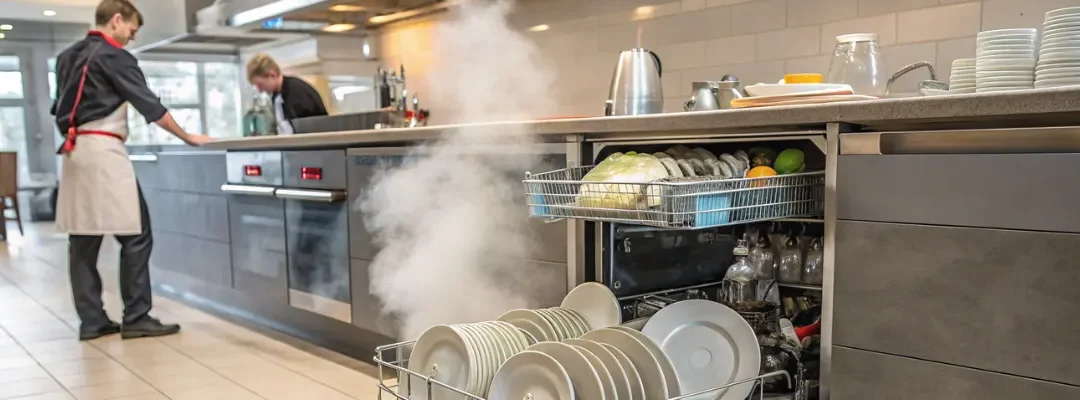
In hotels, restaurants, hospitals, and canteens, clean and germ-free dishes are a must. Customers expect high hygiene standards, and health authorities demand compliance with food safety laws. This is where commercial dishwashers play an important role. They don’t just save time — they also make sure your kitchen follows strict hygiene rules.
Why Food Safety Matters in Dishwashing
Every plate, glass, and utensil that comes into contact with food can carry germs if not cleaned properly. Manual washing often leaves behind grease, stains, or bacteria. In a professional kitchen, this can lead to food contamination, health risks, and even penalties from inspectors.
How Commercial Dishwashers Ensure Hygiene
1.High-Temperature Sterilization
Commercial dishwashers use hot water (65–85°C) that kills 99.9% of bacteria and viruses, something manual washing can’t guarantee.
2.Consistent Cleaning Every Time
Unlike hand washing, where results depend on staff, dishwashers provide uniform cleaning with every cycle, ensuring no shortcuts.
3.Preventing Cross-Contamination
Sponges and cloths can spread germs from one dish to another. Commercial dishwashers use fresh water sprays and controlled detergent systems, preventing cross-contamination.
4.Meeting Compliance Standards
Most food authorities, including FSSAI in India and HACCP globally, require strict cleaning methods. Commercial dishwashers are designed to meet these hygiene compliance standards easily.
Benefits for Professional Kitchens
- Safe & Hygienic Utensils for every customer.
- Reduced Risk of Foodborne Illnesses.
- Pass Food Safety Inspections with Ease.
- Save Time and Labor while maintaining hygiene.
- Boost Customer Confidence with consistently clean dishes.