
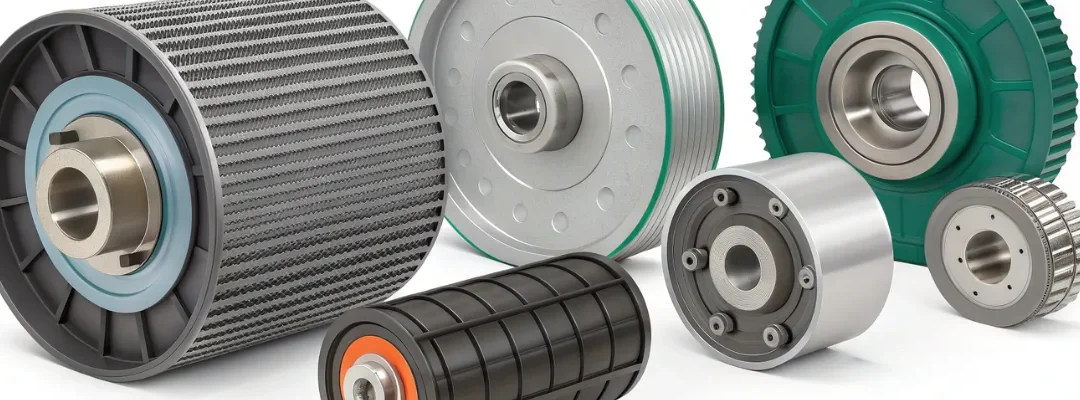
In any conveyor system, the pulley plays a critical role in driving, redirecting, and maintaining tension in the belt. Selecting the right conveyor pulley type is vital for ensuring smooth operation, reducing wear, and extending the life of the entire system.
This guide provides a detailed look at the main types of conveyor pulleys, their construction, and where each is best applied — making it a valuable resource for engineers, maintenance teams, and procurement managers.
1. Drive Pulley
Primary Role: Powers the conveyor belt.
Description:
- Positioned at the discharge end of the conveyor.
- Connected to the motor or gearbox to transmit rotational power.
- Often fitted with rubber or ceramic lagging to enhance grip and reduce belt slippage.
Best For:
- High-torque applications like mining, aggregate handling, cement plants, and bulk material transport.
2. Tail Pulley
Primary Role: Guides the belt back to the drive pulley while maintaining proper tracking.
Description:
- Located at the loading or feed point.
- Can be flat-faced or crowned for better belt alignment.
- Available in solid or wing designs for self-cleaning.
Best For:
- Agricultural conveyors, grain handling, and general material transport systems.
3. Snub Pulley
Primary Role: Increases the wrap angle around the drive pulley for improved traction.
Description:
- Positioned close to the drive pulley on the return side.
- Reduces belt slip without additional tensioning force.
Best For:
- Systems handling heavy loads or operating in damp or slippery conditions.
4. Bend Pulley
Primary Role: Changes belt direction or guides it around other conveyor components.
Description:
- Not connected to the drive.
- Can be flat or crowned depending on tracking needs.
- Used to fit conveyor layouts with limited space.
Best For:
- Long-distance conveyors, multi-directional material handling lines.
5. Take-Up Pulley
Primary Role: Maintains belt tension and compensates for elongation.
Description:
- Works with either gravity or screw take-up systems.
- Adjustable to ensure proper belt tension at all times.
Best For:
- Systems with variable loads, temperature changes, or frequent starts/stops.
6. Wing Pulley
Primary Role: Self-cleans by allowing loose material to fall through gaps between wings.
Description:
- Built with gusseted “wings” instead of a solid drum face.
- Prevents material build-up and reduces belt damage.
Best For:
- Harsh, dirty environments like quarries, coal handling, and mining operations.
Pulley Lagging Options
Choosing the right lagging can further improve pulley performance:
- Rubber Lagging: Improves traction and reduces wear.
- Ceramic Lagging: Extreme abrasion resistance for heavy-duty applications.
- Plain Steel: Suitable for clean, dry environments.
Factors to Consider When Choosing a Conveyor Pulley
- Load Capacity & Belt Speed – Higher loads require stronger construction.
- Operating Environment – Dust, moisture, temperature, and abrasiveness of materials.
- Maintenance Frequency – Accessibility for inspections and repairs.
- Belt Type & Tension Requirements – Compatibility with conveyor specifications.