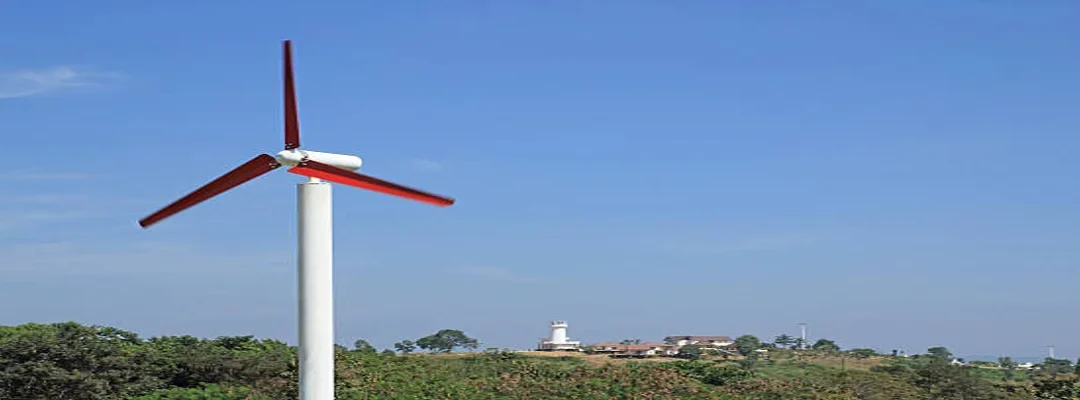
Home wind turbines can deliver useful energy in the right Indian sites—but they’re not “install and forget.” Because a turbine has moving parts, bearings, fasteners, electrical protections, and a tall structure, routine maintenance is what keeps it safe, quiet, and productive.
This guide gives you a practical, publish-ready maintenance checklist designed for Indian conditions (dust, heat, monsoon moisture, lightning risk, coastal corrosion). Use it alongside your manufacturer’s manual—the manual always wins if there’s a conflict.
Who this checklist is for
- Homeowners with small wind turbines (tower-mounted or rooftop-mounted)
- Homes with wind + solar hybrid systems and batteries
- People considering an AMC/maintenance contract and want to know what “good service” includes
What “good maintenance” looks like
A well-maintained system should have:
- Stable output trends (no unexplained drops)
- No new vibration/noise
- Tight, corrosion-free hardware
- Dry, protected electrical boxes and terminations
- Healthy earthing/lightning protection
- Safe shutdown/braking behavior
Safety rules (important)
Wind turbine maintenance can involve working at height, high voltage, and rotating machinery.
Do not climb towers, open live panels, or work near rotating blades unless trained and equipped. For most homeowners, the safe approach is:
- Do ground-level checks yourself
- Use a qualified technician for tower/mechanical/electrical work
If your turbine has a stop switch / brake / isolation procedure, learn it and label it clearly.
Maintenance schedule (India-friendly)
Use this schedule as a baseline; adjust to your turbine manual and site conditions.
| Frequency | What it’s for | Who should do it |
|---|---|---|
| Weekly / Fortnightly | Spot issues early (noise, alarms, output drop) | Homeowner (ground-level) |
| Monthly | Visual + basic system health | Homeowner + technician if needed |
| Quarterly | Mechanical checks, bolt verification, electrical terminations | Technician |
| Pre-monsoon | Waterproofing, earthing, lightning readiness | Technician (recommended) |
| Post-monsoon | Damage/corrosion checks + performance confirmation | Technician |
| Annual | Full preventive service (wear parts + safety systems) | Technician + installer/OEM |
Weekly / Fortnightly checks (ground-level, 5–10 minutes)
1) Output and alerts
- Note your energy generation (kWh) for the period (from inverter/controller/app).
- Check for fault codes, warnings, or repeated trips.
- Watch for “starts later than usual” or frequent cut-outs.
Red flag: sudden drop in generation under similar wind conditions → schedule inspection.
2) Sound and vibration (from a safe distance)
- New rattling, grinding, thumping, squealing
- Unusual vibration visible in tower/pole or mounting
- Any “wobble” in rotor rotation
Red flag: new mechanical noise/vibration → stop the system and call service. Small issues become expensive quickly.
Monthly checks (ground-level + accessible components)
3) Visual inspection (binoculars help)
Look for:
- Blade chips, cracks, or edge wear
- Loose or flapping cables
- Rust streaks, paint peeling, salt deposits (coastal)
- Bird/debris impact marks
Do not attempt DIY blade repair unless your OEM specifically allows it—unbalanced blades can damage bearings and the tower.
4) Controller/inverter and enclosure condition
- Ensure electrical enclosures are dry and sealed
- Check cable glands (no gaps), conduit supports, and UV damage
- Look for discoloration or burning smell near connections
Red flag: water ingress, burn marks, melted insulation → keep it off until repaired.
Quarterly checks (technician recommended)
5) Fastener and torque verification
A lot of turbine problems begin with loosened hardware.
- Check/tighten bolts to manufacturer torque spec:
- tower base and flange
- nacelle mounts
- hub/rotor connections
- yaw/tail assembly (if applicable)
6) Mechanical wear parts
Depending on turbine type:
- Bearing condition and play
- Yaw system wear (turning mechanism)
- Brake/shutdown mechanism function
- Lubrication (grease points) or oil changes if applicable
7) Tower / pole / foundation integrity
- Foundation cracks, settlement, water pooling
- Corrosion on tower sections, weld points, clamps
- For guyed towers: guy-wire tension, corrosion at anchors, strand damage
India tip: dust + monsoon moisture accelerates corrosion at joints and anchor points—this is where technicians should focus.
8) Electrical terminations and protection devices
A qualified technician should check:
- Tightness of electrical terminations (loose lugs create heat)
- DC/AC isolators, breakers, fuses
- Surge protection devices (SPDs) condition
- Earthing continuity and bonding
Pre-monsoon checklist (high priority in India)
Monsoon season increases risks from high winds, water ingress, and lightning. Before the first major storms:
9) Water ingress prevention
- Re-seal junction boxes and inspect gaskets
- Check cable entry points and glands
- Confirm drip loops and proper cable routing
10) Earthing and lightning readiness
- Inspect earthing conductors for corrosion or loose joints
- Check lightning protection components (if installed)
- Replace failed SPDs (they can degrade after surges)
11) Shutdown procedure test
- Confirm emergency stop/isolation works
- Confirm turbine brakes/limits operate as designed
Post-monsoon checklist
After storms and heavy rain:
- Inspect blades and rotor for impact damage
- Recheck tower base, anchors, and corrosion
- Confirm enclosures are dry
- Compare generation trend to pre-monsoon baseline
If generation drops after monsoon, it’s often due to water ingress, damaged terminations, or mechanical wear—don’t ignore it.
Coastal and high-corrosion areas (extra checks)
If you’re near the sea or in high-salinity air:
- Increase inspection frequency for:
- rust/paint failure
- fastener corrosion
- electrical terminal oxidation
- Consider OEM-approved corrosion protection upgrades (coatings, marine-grade hardware)
If you have batteries (wind-solar hybrid systems)
Many “turbine problems” are actually battery or controller issues.
Quarterly checks should include:
- Battery terminal tightness and corrosion
- Battery health indicators (voltage, internal resistance if supported)
- Controller settings and charging behavior
- Ventilation and temperature management (especially in hot Indian summers)
Stop the turbine and call service if you see any of these
- New grinding/rattling noise or visible vibration
- Blade crack, missing chunk, delamination, or bent rotor behavior
- Repeated fault codes or unexplained shutdowns
- Burn marks, melted insulation, or water inside electrical boxes
- Loose tower hardware, guy-wire slack, or foundation cracking
What a “proper annual service” should include (scope you can demand)
If you’re paying for an annual visit or AMC, the technician should typically cover:
- Full mechanical inspection (bearings, yaw, tail, brake/shutdown)
- Bolt torque verification to spec
- Blade inspection + balancing check if needed
- Tower/foundation/guy-wire inspection
- Electrical terminations inspection (heat damage, tightness, oxidation)
- Protection checks: isolators, breakers, SPDs
- Earthing/bonding verification
- Firmware/controller fault log review (if applicable)
- Updated maintenance log + next due dates
If a provider only “greases and leaves,” it’s not a complete service.
Maintenance log template (simple, but powerful)
Keep a log (Google Sheet or notebook):
- Date + wind conditions (rough note)
- kWh generated since last check
- Any fault codes or alarms
- Noise/vibration observations
- Work done + parts replaced
- Photos (before/after)
- Next due date (monthly/quarterly/annual)
This prevents guesswork and helps diagnose issues faster.
Common maintenance mistakes (and how to avoid them)
- Ignoring early noise/vibration → small wear becomes bearing failure
- Skipping pre-monsoon checks → water ingress + lightning damage
- Loose terminations → heating, trips, fire risk
- DIY blade patching without balancing → rotor imbalance and major damage
- No logbook → nobody can prove what changed or when
FAQ
How often does a home wind turbine need maintenance?
Most turbines need light monitoring weekly/monthly and a technician visit quarterly/annually. In India, a pre-monsoon + post-monsoon check is strongly recommended.
Can I maintain it myself?
You can do ground-level monitoring and visual checks. Tower climbing, electrical panels, and mechanical servicing should be handled by trained technicians.
Does maintenance affect output?
Yes. Loose bolts, worn bearings, blade damage, and poor electrical connections directly reduce output and can trigger shutdowns.