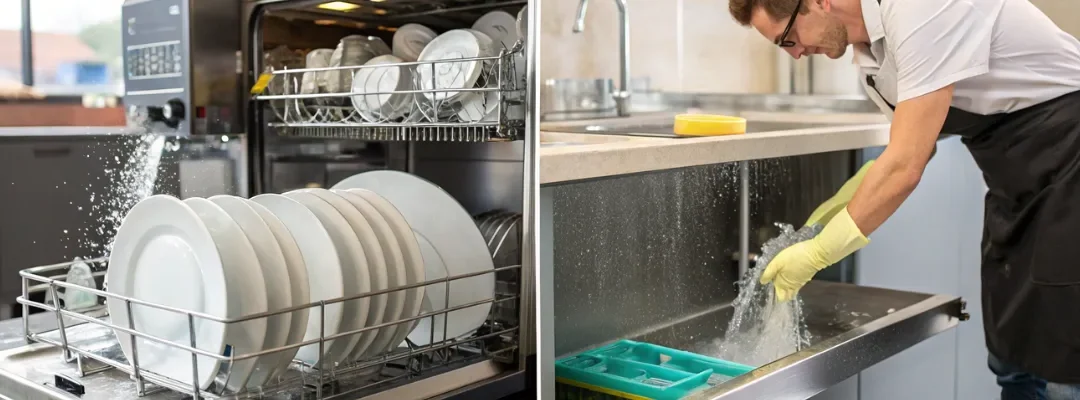
In every restaurant, café, hotel, or canteen, one question always comes up: what’s the best way to wash dishes — by hand or with a commercial dishwasher? While many kitchens still rely on manual washing, more and more are switching to dishwashers. The main reason is hygiene. Let’s compare both methods and see which one keeps dishes safer and cleaner.
1.Temperature and Germ Control
- Hand Washing: Most people wash dishes in warm or room-temperature water. This is usually not hot enough to kill germs and bacteria.
- Commercial Dishwasher: These machines rinse dishes at 65–85°C (150–185°F), which ensures proper sterilization. This high heat kills 99.9% of bacteria and viruses that hand washing may leave behind.
2.Consistency in Cleaning
- Hand Washing: The quality depends on the staff, water temperature, and detergent used. Some grease or food particles may remain if staff are rushed.
- Commercial Dishwasher: Provides uniform cleaning every cycle with controlled water jets, detergents, and high-pressure sprays.
3.Risk of Cross-Contamination
- Hand Washing: Sponges and cloths can harbor germs and spread them across plates, glasses, and utensils.
- Commercial Dishwasher: Uses fresh water and rinses for each cycle, eliminating cross-contamination risks.
4.Hygiene Standards & Compliance
- Hand Washing: Difficult to meet strict standards like FSSAI or HACCP for food safety.
- Commercial Dishwasher: Specifically designed to comply with international hygiene regulations, making them mandatory in many professional kitchens.
5.Human Error vs. Automation
- Hand Washing: Depends on how carefully and thoroughly each worker washes. Mistakes are common during peak hours.
- Commercial Dishwasher: Automated cycles mean no shortcuts. Every dish is washed and sterilized to the same high standard.