Conveyors in Elevator Car Assembly
In the competitive elevator manufacturing industry, precision, efficiency, and safety are non-negotiable. Conveyors in elevator car assembly play a critical role in streamlining production lines, ensuring smooth material handling, and enabling faster integration of key components. These systems are more than just material movers—they are engineered to enhance process accuracy, reduce manual dependency, and meet stringent quality standards.
By implementing elevator car assembly conveyor systems, manufacturers can achieve higher throughput, minimize errors, and maintain consistent assembly workflows. This page explores the importance of conveyors in elevator production, their types, applications, benefits, and the value they bring to modern elevator car assembly.
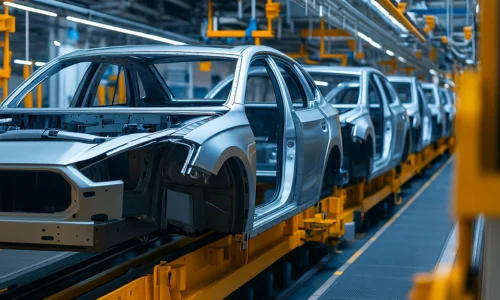
The Role of Conveyors in Elevator Car Assembly
During elevator manufacturing, multiple components—such as panels, structural frames, doors, fixtures, and control units—must be accurately positioned and assembled. Conveyors ensure these elements are moved efficiently between workstations, improving synchronization across the assembly line. Key contributions include:
- Automation of material handling – conveyors reduce reliance on manual labor, lowering risks of delays and inconsistencies.
- Precision movement – ensuring that components reach the right assembly station at the right time.
- Workflow optimization – keeping the production line continuous and synchronized with testing and quality assurance processes.
Modern automated conveyor systems for elevator car assembly are designed to integrate seamlessly into production layouts, supporting lean manufacturing and smart factory initiatives.
Types of Conveyors Used in Elevator Car Assembly
Roller Conveyors
Perfect for handling heavy elevator car parts such as frames and flooring. Roller conveyors provide low-friction movement, allowing operators to position and align components efficiently.
Belt Conveyors
Smooth, flat-surfaced belts are widely used for transporting lightweight elevator components, such as panels and fixtures. Their clean design and versatility make them ideal for continuous assembly processes.
Chain Conveyors
Built for heavy-duty applications, chain conveyors move bulky and robust elevator parts, ensuring safe and reliable transfer. Their durability makes them essential for large-scale elevator manufacturing.
Vertical Conveyors
Elevator car assembly often requires multi-level production lines. Vertical conveyors enable smooth transfer of parts between assembly levels, optimizing space and ensuring efficient integration of components.
Applications of Conveyors in Elevator Car Assembly
Material Handling
Efficient transfer of panels, fixtures, and structural parts to assembly stations.
Component Integration
Smooth flow of parts for precise assembly, reducing misalignment or delays.
Testing & Quality Assurance
Conveyors support movement of semi-assembled units to inspection stations, ensuring compliance with safety and performance standards.
Benefits of Conveyor Systems in Elevator Car Assembly
Improved Efficiency – Faster movement of parts reduces bottlenecks, leading to higher production output.
Enhanced Accuracy – Automated systems ensure precise positioning of components, supporting consistent assembly quality.
Reduced Labor Dependency – Less manual handling allows skilled workers to focus on technical assembly tasks.
Safer Operations – Minimizes risks associated with manual lifting and moving of heavy elevator components.
Cost Optimization – By streamlining operations, conveyors lower long-term labor and operational costs.
Key Components of Elevator Assembly Conveyor Systems
Conveyor Belts, Rollers, or Chains – Core mechanisms that move components seamlessly.
Drive Units – Provide controlled power for consistent movement and speed adjustments.
Automation Controls – Enable speed regulation, stopping, and synchronization with assembly processes.
Safety Features – Integrated emergency stops and guarding ensure worker safety during operation.
Challenges Without Conveyor Integration
- Manual Handling Inefficiencies – Slowdowns, higher risk of component damage, and inconsistent workflow.
- Increased Labor Costs – More workforce required for repetitive, non-value-added tasks.
- Logistical Complexity – Difficult coordination between assembly stages without automation.
Why Choose Us for Elevator Car Assembly Conveyor Solutions?
we combine deep industry expertise with advanced engineering to deliver reliable and efficient conveyor systems specifically designed for elevator manufacturing.

Proven expertise
Years of experience in designing automated conveyor systems for elevator car assembly lines worldwide.

Industry-Specific Solutions
Tailored conveyors (belt, roller, chain, and vertical) to meet your specific assembly line layout and production capacity.

High Quality Standard
Robust, precision-engineered conveyors ensuring durability, safety, and compliance with international manufacturing standards.

Seamless Automation Integration
Our systems integrate with modern PLC and robotic assembly lines, improving throughput and reducing downtime.

End-to-End Support
End-to-end services including design, fabrication, installation, and after-sales support to ensure long-term reliability.
Frequently Asked Questions
What is the cost of implementing an elevator car assembly conveyor system?
The cost depends on factors like conveyor type, production capacity, level of automation, and customization. Contact us for a tailored quotation based on your specific needs.
Are automated conveyor systems safe for workers?
Absolutely. Our conveyors include safety features such as emergency stop controls, guarding, and automation sensors to ensure a safe working environment.
Can conveyor systems be customized for different elevator designs?
Yes, we design customized conveyor solutions tailored to the assembly layout, production speed, and specific requirements of your elevator models.
How do conveyors improve elevator car assembly efficiency?
Conveyors automate material movement, reduce manual labor, improve precision, and keep assembly lines running smoothly, resulting in faster production and higher output.
What type of conveyors are used in elevator car assembly?
Elevator car assembly commonly uses belt conveyors, roller conveyors, chain conveyors, and vertical lifts. Each serves a specific purpose, such as moving lightweight panels or handling heavy structural components.